
White walls
Cream-toned surfaces
Light flooring
Natural wood furniture
This has become a familiar visual language in today’s Minimal and Contemporary interior design.
But what if you love reclaimed teak, yet don’t want the deep brown tone?
The answer is:
Yes, reclaimed teak can be lightened.
But the real question WoodTist invites you to consider is:
Do we really need to make it as light as another type of wood?
Reclaimed Teak Is Not a Blank Canvas
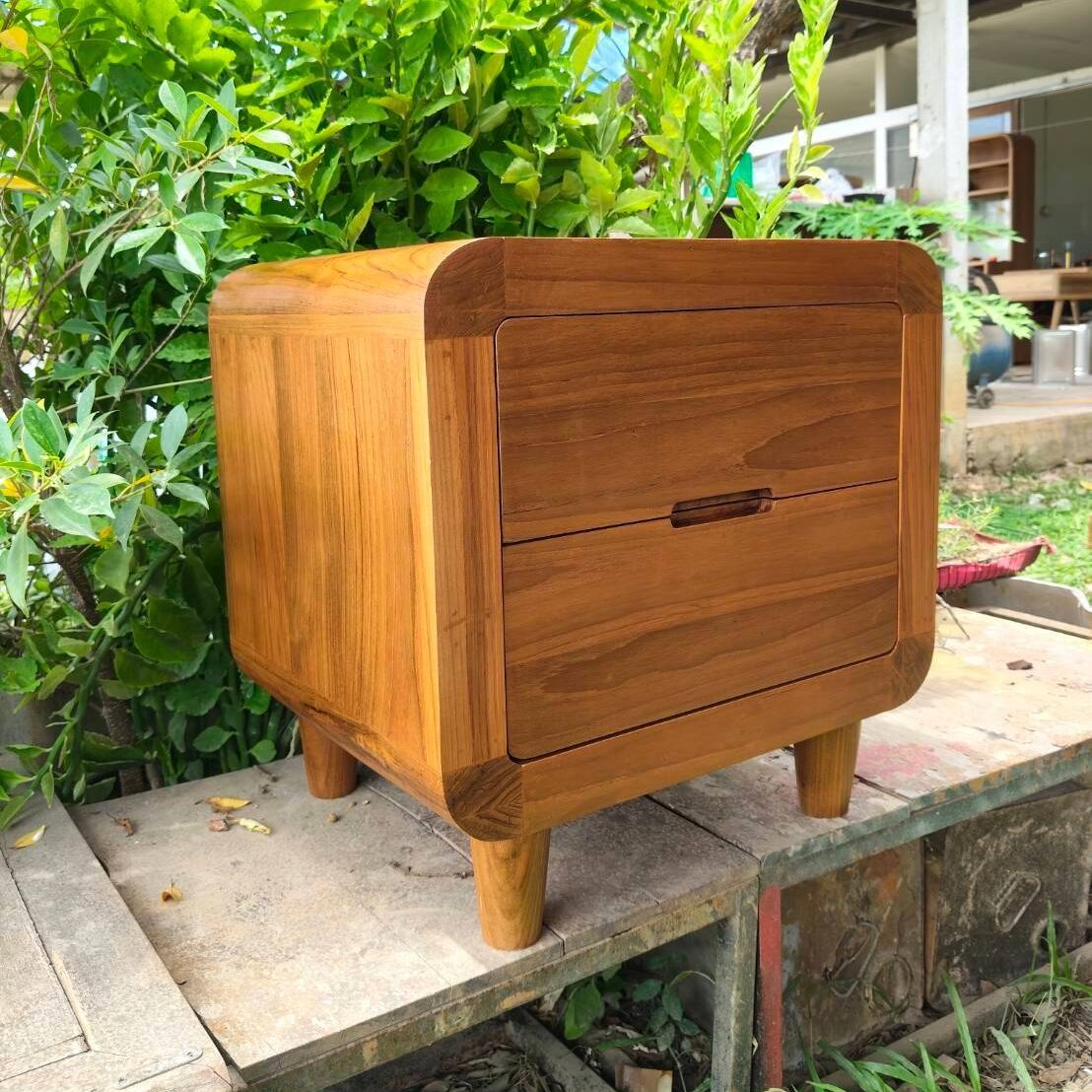
The wood used by WoodTist is reclaimed teak wood that has been given a second life.
Before becoming a single piece of furniture, each board may have been part of a house for decades.
We don’t know exactly where it once was, how much sunlight it was exposed to, what finishes it had before, or what chemicals it may have encountered over time.
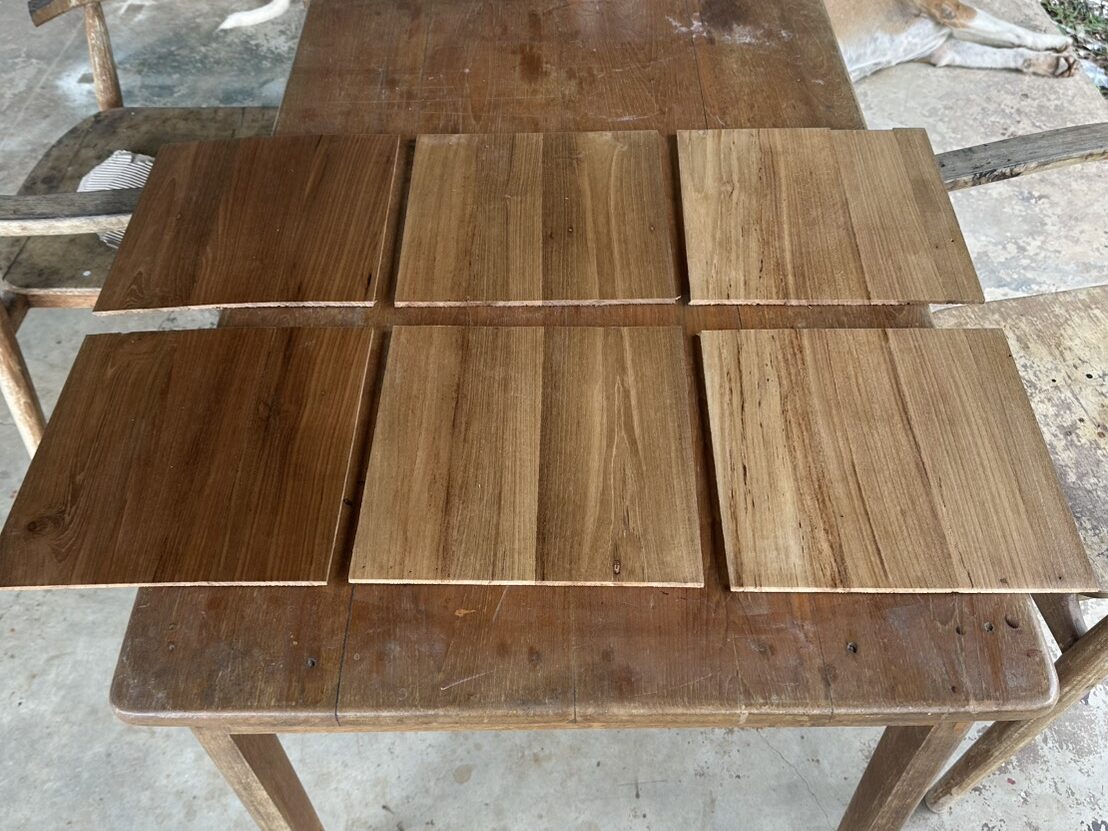
So even when multiple boards are placed side by side, we cannot expect them to react to finishing processes in the same way.
This is the nature of reclaimed teak.
Its past still lives within the material.
If We Want a Lighter Tone, What Do We Do?
After selecting, joining, planing, sanding, shaping, and refining the furniture, the next step—if a lighter tone is desired—is a process called wood bleaching.
At our workshop, this is typically done in 1–2 cycles, depending on the desired shade and the condition of the wood. Each cycle requires the wood to dry completely before the next one can begin.
After bleaching, the process continues with coloring, touch-up work, filling, and surface coating. It may sound like we can gradually standardize all pieces into a single uniform color. But in reality,
wood does not fully obey control.

Why Doesn’t Every Piece Look the Same?
Because their origins are different. One board may lighten significantly after bleaching, while another may still retain its original tone.
What the craftsman can do is balance the overall appearance, then fine-tune differences through color touch-ups.
But the more we try to force uniformity, the more we face a question:
Are we enhancing the wood—or hiding what it naturally is?
For WoodTist, this is a fine line between color design and forcing the material.
Light Tones Have Their Own Beauty
We understand why many people love light-colored wood.
It makes a space feel airy and soft, blends easily with white and neutral interiors, and sometimes even highlights the grain of teak more clearly.
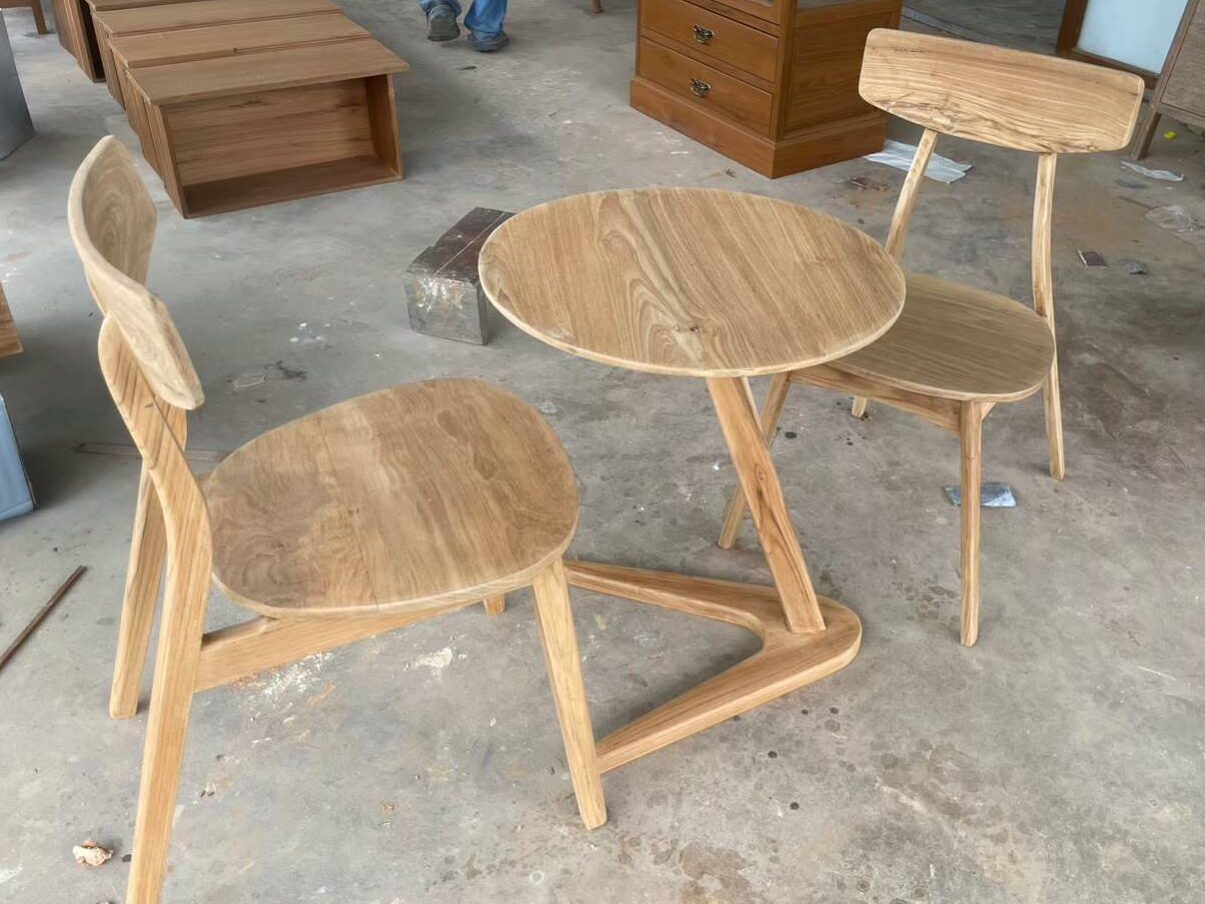
When lightened, reclaimed teak can resemble materials like oak, ash, or beech often seen in international interior references.
But reclaimed teak will never become as white or uniform as those woods by nature.
And we don’t believe it needs to.
Because It’s Not Just About “Color”
Every time we lighten reclaimed teak, we introduce additional processes.
One of them involves chemical bleaching, which requires skill and careful handling for worker safety.
At our workshop, we limit bleaching to no more than two cycles to reduce chemical exposure for our craftsmen.
For WoodTist, this means color selection is not just a mood board decision.
It is directly connected to material, process, and the people behind the furniture.
Maybe “Natural” Is Not a Single Color
When people say “natural wood color,” they often imagine beige or light oak tones. But nature does not follow a single Pantone code.
One piece of reclaimed teak may be darker than another, some may show stronger grain patterns, others may carry visible traces of their past life.
For us, these differences are not imperfections. They are the character of the material we chose from the beginning.
So if you love a light-toned home, you can still use reclaimed teak. We can soften the tone, select boards with suitable color from the start,
design proportions that balance with surrounding elements, and allow slight variations instead of forcing everything to look identical.

The result may not be as white as beech, nor as perfectly uniform as factory-made materials.
But what you get is furniture that still feels like reclaimed teak in its own identity.
Not wood pretending to be something else.
Not Just Wood! It’s You.
Interested in designing a Reclaimed Teak Table or custom furniture?
Order now via LINE: @409yiadr