We are used to objects that leave a factory looking perfect and are expected to remain exactly the same.
The surface should stay smooth. The color should stay even. The joints should not move.
So when we notice a small opening or crack in a piece of real wood furniture, the first thought is often: “Is something wrong with it?”
But when the material is reclaimed teak, the answer is not always that simple. Because real wood does not stop responding to its surroundings just because it has become furniture.
Wood Continues to Respond to the Home It Lives In
Before entering your home, a piece of furniture may have been sitting in a workshop with one level of temperature and humidity.
Then it is transported to another province, placed in an air-conditioned room, positioned near a window, or exposed to a different season altogether.
Wood gradually adjusts to its new environment. As it absorbs or releases moisture, the dimensions of the wood can change slightly.
Sometimes this appears as a small opening at a joint. Sometimes as a fine crack. Sometimes there is almost no visible change at all.
In the language of people who love working with wood, we sometimes say: “The wood is still alive.”
Scientifically, the wood in a finished piece of furniture is no longer living tissue. But the expression points to something real: wood continues to interact with the environment around it.
Why Does WoodTist Choose Reclaimed Teak?
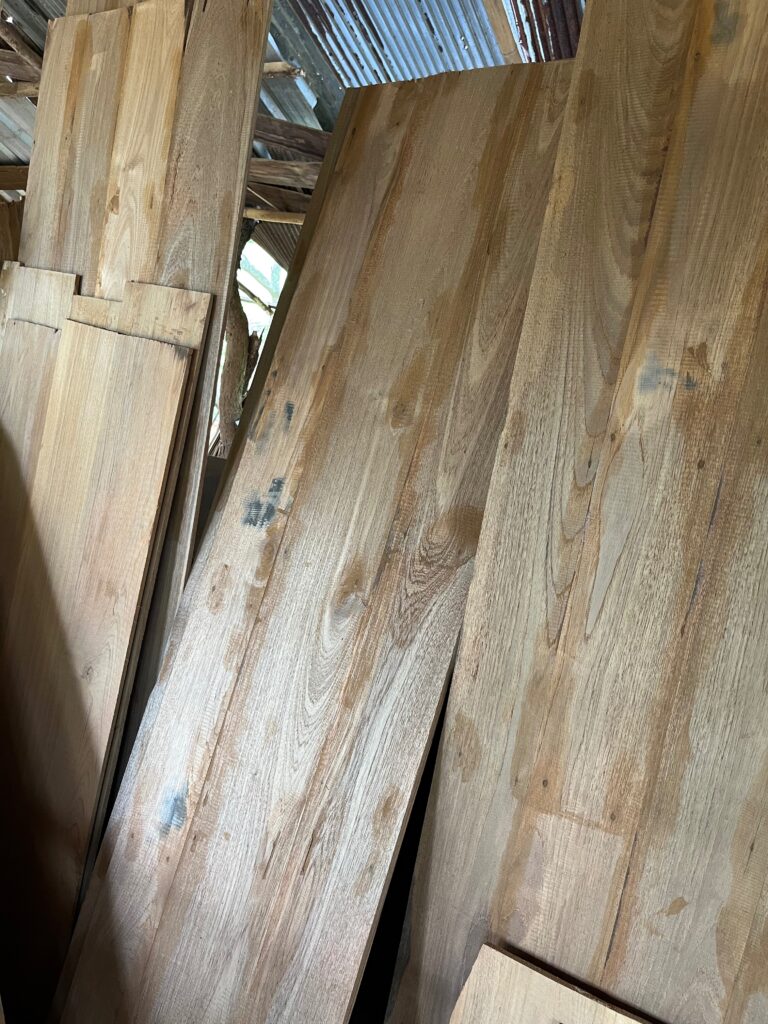
The wood we use is not freshly cut. It may once have been part of a house or another structure, exposed to heat, humidity, seasonal changes, and time for decades.
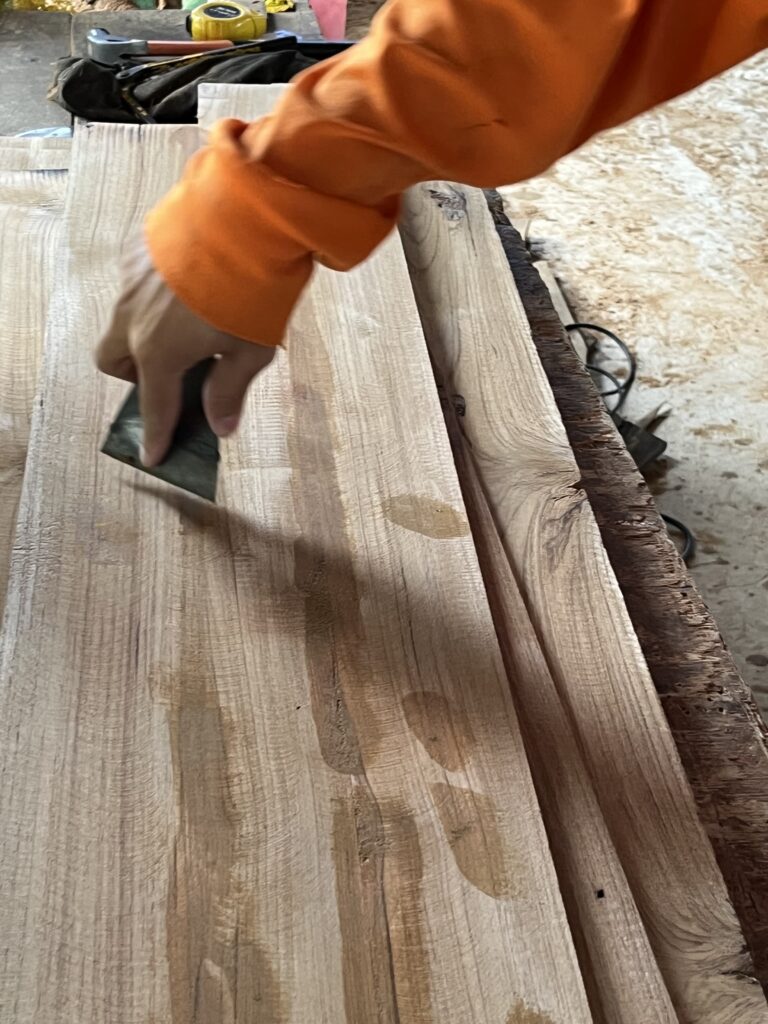
Before we reuse it, the wood is selected, resurfaced, planed, sanded, and prepared again.
One advantage of old teak that has already dried and stabilized over time is that it generally undergoes less dimensional change than wood that still contains a higher level of moisture.
But WoodTist does not choose reclaimed teak because we expect it to never change.
We choose it because we accept that natural materials have a past, carry visible traces, and continue to respond to the place they now belong to.
Is Every Crack Part of the Wood’s Character?
No. This is an important distinction. Accepting the natural behavior of wood does not mean calling every type of damage “character.”
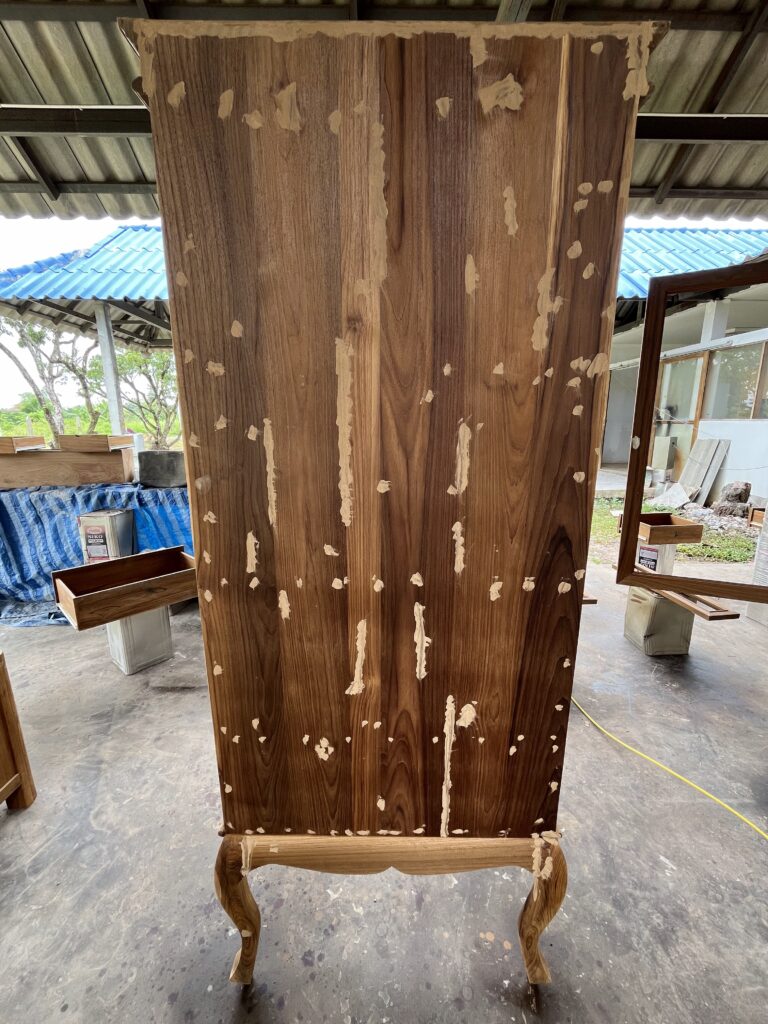
Before reclaimed teak becomes furniture, our craftsmen inspect and prepare each piece. Old nail holes, gaps, and certain cracks are filled and refined during the preparation and finishing process.
After the furniture is installed, a small opening may sometimes appear as the wood adjusts to its new environment. But if a crack affects the structure, a joint, or the way the furniture functions, that is a different matter and should be checked by a craftsman.
For us, understanding natural materials does not mean: “Anything is acceptable because it is wood.”
It means: “We understand what belongs to the nature of the material, and we know when it needs attention.”
Maybe Perfection in Real Wood Does Not Mean Having No Marks at All
Look closely at a piece of real wood.
One board may be darker than another. The grain may run in different directions. Some surfaces may still carry traces of a previous life. Others may shift slightly after entering a new home.
If we expect every natural board to remain perfectly identical, we may be asking nature to behave like an industrial material.
At WoodTist, we are more interested in a different question. Not: “How do we stop wood from changing?” But: “How do we design in a way that allows natural material to move while remaining beautiful and functional?”
Before Choosing Real Wood Furniture, Try Asking a Different Question
Instead of asking only: “Will the wood crack?”
It may be more useful to ask: “How was this wood prepared?” “How dry and stable is the material?” “If natural movement happens, how should it be cared for?”
Good furniture is not created by forcing a material to stop being itself. It comes from designers and craftsmen who understand how the material behaves and work with it rather than against it.
For WoodTist, this is one of the reasons we choose reclaimed teak. Wood that has already lived one life is given another purpose. And when it enters a new home, it begins a new chapter again.
Not Just Wood! It’s You.
Interested in designing a Reclaimed Teak Table or custom furniture? Order now via LINE: @409yiadr
FAQ
Does a crack in reclaimed teak mean the furniture is damaged?
Not always. Small cracks or openings can sometimes appear as wood adjusts to the humidity of a new environment. However, if the crack affects the structure or function of the furniture, it should be inspected by a craftsman.
Why does real wood expand and contract?
Wood absorbs and releases moisture from the surrounding air. When humidity changes, the wood can expand or contract slightly.
Is reclaimed teak more stable than new wood?
Older teak that has already dried and stabilized over time generally tends to change less than wood that still contains higher moisture levels. However, stability also depends on how the wood is prepared and the environment in which it is used.
Is every crack part of the wood’s character?
No. Natural marks and structural problems are not the same thing. Good craftsmanship includes understanding which marks can remain and which ones need to be repaired or monitored.