If Our Lives Are Different, Why Should Our Furniture Be the Same?
How many shelves should a shoe cabinet have? How high should a table be? How wide should a storage unit be?
Design has many standards, and those standards are useful. But there is one thing that does not come in a standard size: the way people live.
Some people own five pairs of shoes. Others collect them for years.
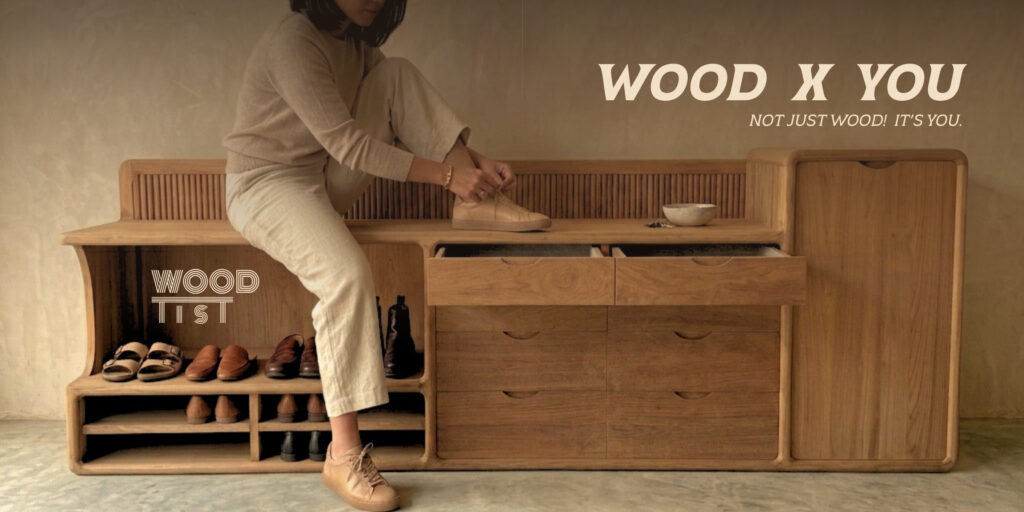
Some like to sit down while putting on their shoes. Others need a drawer for keys, wallets, or everyday items by the entrance.
Some prefer everything hidden behind closed doors. Others want their favorite objects to remain visible.
If the way we live is different, why should the furniture around us be designed for someone else’s standard?
The Extended Self: When the Things We Own Become Part of “Us”
In 1988, consumer researcher Russell W. Belk published Possessions and the Extended Self in the Journal of Consumer Research.
One of the central ideas in his work is that the things we possess can become part of how we construct and express our identity.
We can easily see this in personal objects:
the clothes we wear, the books we keep, the art we display, or the objects we carry every day.
Furniture can work in a similar way. It does not only show what style we like. It can also reveal how we live.
Good Custom Design Starts With the Person, Not the Product
At WoodTist, we are interested in a different question. Not simply: “What kind of furniture do you want?” But: “How do you live?”
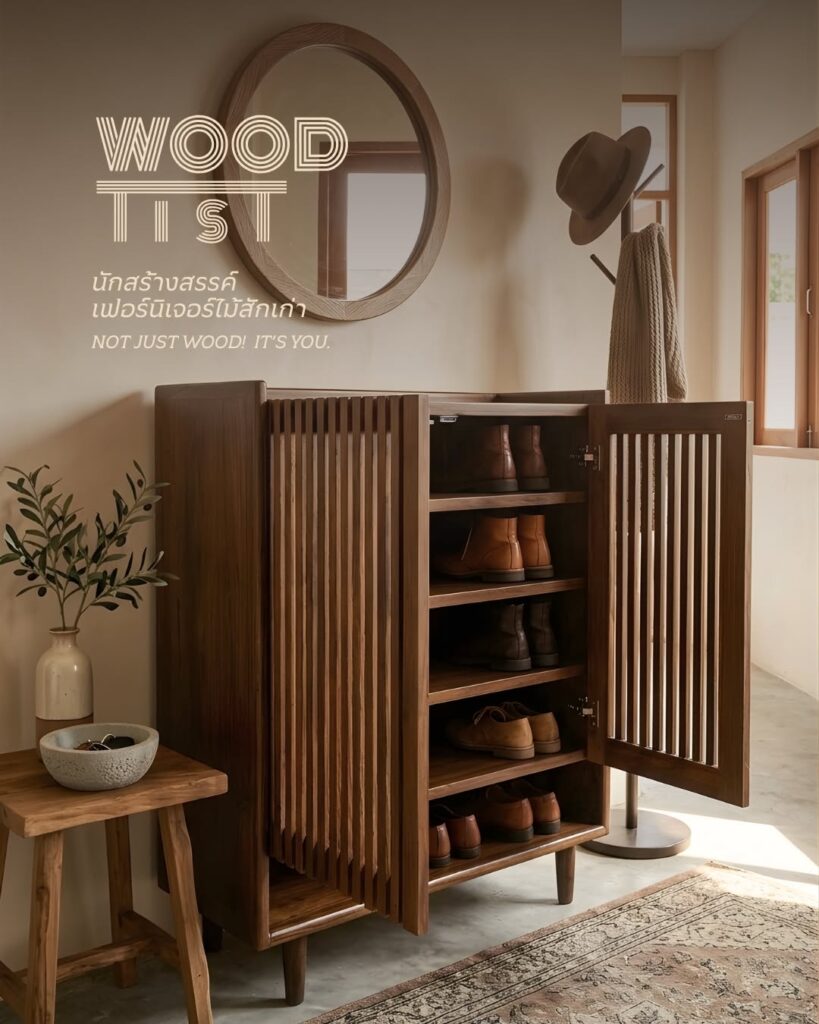
Take a shoe cabinet, for example. A standard design might begin with width, height, and the number of shelves.
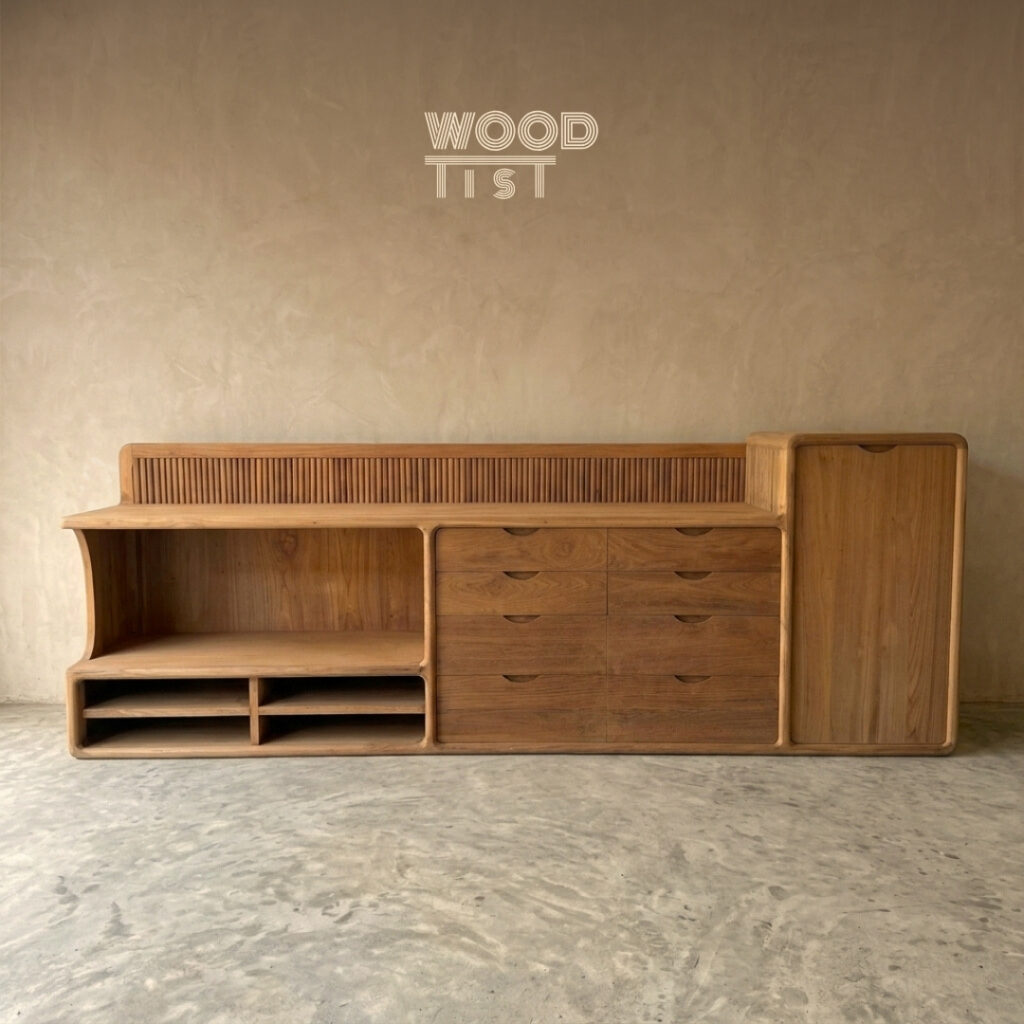
A more personal design begins differently. What kind of shoes do you own? Which pairs do you use every day? Do you sit or stand while putting them on? What do you usually place near the entrance? What should stay visible, and what should be hidden?
Those answers gradually become:
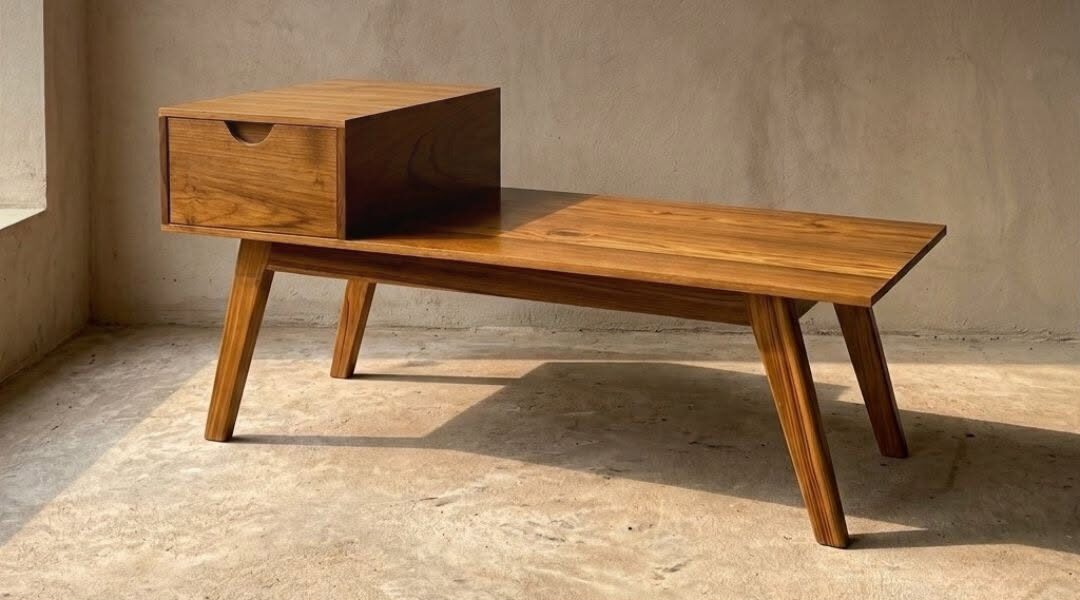
a bench, a drawer, an open shelf, a closed cabinet, a certain height, or a particular proportion.
The final form is not created because “this is the style everyone is using right now.”
It is created because “this is how this person actually lives.”
Being Unique Is Not the Only Point
People often describe bespoke furniture as valuable because it is one of a kind. For WoodTist, uniqueness is only part of the story.
What matters more is relationship.
Does the piece actually relate to the owner’s life?
Is that drawer there because it looks good, or because the owner naturally reaches for that spot every morning?
Is the seat that height because it follows a trend, or because it feels right for the person who will use it?
When every detail has a reason rooted in real life, the result does not become different simply for the sake of being different.
It becomes different because the owner is different.
Where Does Reclaimed Teak Fit Into the Extended Self?
This is where WoodTist adds another layer. We are not working with a completely blank material. We work with reclaimed teak that already carries a past of its own.
Each board may once have been part of a house or another structure. It may have lived through decades of changing weather and use.
Its grain may be different. Its tone may be uneven. Its surface may still carry traces of an earlier life.
So a custom-made piece becomes a meeting between two stories: the story of the material × the story of the owner
The wood already has character. The person already has character. The role of design is to find a way for both to belong together.
Bespoke Does Not Mean “Anything Is Possible”
In custom design, we often hear: “Anything can be made.” But WoodTist does not see it that way. Real wood has its own nature.
Reclaimed teak comes with specific grain, dimensions, color variation, and marks. Some ideas work beautifully with the material. Others need to be adjusted.
So thoughtful custom design is not about forcing the material to follow every request. It is about finding balance between:
YOU × DESIGN × MATERIAL
The owner brings the way they want to live. The designer translates that into form. The craftsman makes sure the form respects the structure and behavior of the wood.
When these three come together, the result becomes more than made-to-order furniture. It begins to carry meaning.
Maybe Good Furniture Is Furniture You Do Not Have to Adapt To
We often adapt ourselves to the things we buy. We buy extra boxes because a cabinet does not have enough space. We move objects elsewhere because a shelf is too high. We store some shoes in another room because the compartments do not fit them.
A custom-made piece allows us to reverse that question. Instead of asking: “How should I adapt to this furniture?”
we can ask: “What kind of furniture should be created around the way I already live?”
That is why we believe: We do not design people to fit furniture. We design furniture to fit people.
The Extended Self does not mean that every object we buy instantly becomes part of our identity. But it helps us see that the relationship between people and objects can be deeper than ownership.
Some things stay with us long enough to become memories. Some become part of a daily routine. Some make a particular room feel distinctly “ours.”
Bespoke furniture can begin with that relationship from the very first stage of design. Not after we buy it and try to make it fit our lives. But before it is even made.
At WoodTist, we do not begin with: What should the furniture look like? We begin with: Who are you?How do you live?And how can this material become part of that life?
Reclaimed teak already has a story. You have your own. When those two stories meet, custom design becomes more than creating a special object. It becomes a new relationship between material and owner. Because perhaps a material becomes most meaningful
when it is designed in relation to someone’s life.
Not Just Wood! It’s You.
Interested in designing a Reclaimed Teak Table or custom furniture? Order now via LINE: @409yiadr
FAQ
What is Custom Furniture?
Custom Furniture is designed specifically for a particular user, space, or need. Its function, proportions, form, materials, and details can be developed around real-life requirements instead of being selected only from a standard design.
What is the Extended Self?
The Extended Self is a concept associated with Russell W. Belk, who proposed that the things we own and use can contribute to how we construct and express our identity.
How does the Extended Self relate to furniture?
Furniture can relate to our routines, preferences, memories, and the way we express ourselves through our living spaces. In this article, WoodTist applies the Extended Self as a way of thinking about the relationship between people and the objects they live with.
Why does WoodTist use reclaimed teak for bespoke furniture?
Because reclaimed teak already carries its own character, grain, color variation, and traces of a previous life. Custom design allows the material, the craftsman, the designer, and the owner to work together rather than forcing every piece of wood to look identical.
Is bespoke furniture always better than ready-made furniture?
Not necessarily. Its value depends on how well the design responds to the user, the space, the material, and the intended function—not simply on being more expensive or unique.
Reference: Russell W. Belk, “Possessions and the Extended Self,” Journal of Consumer Research, Vol. 15, No. 2, 1988.