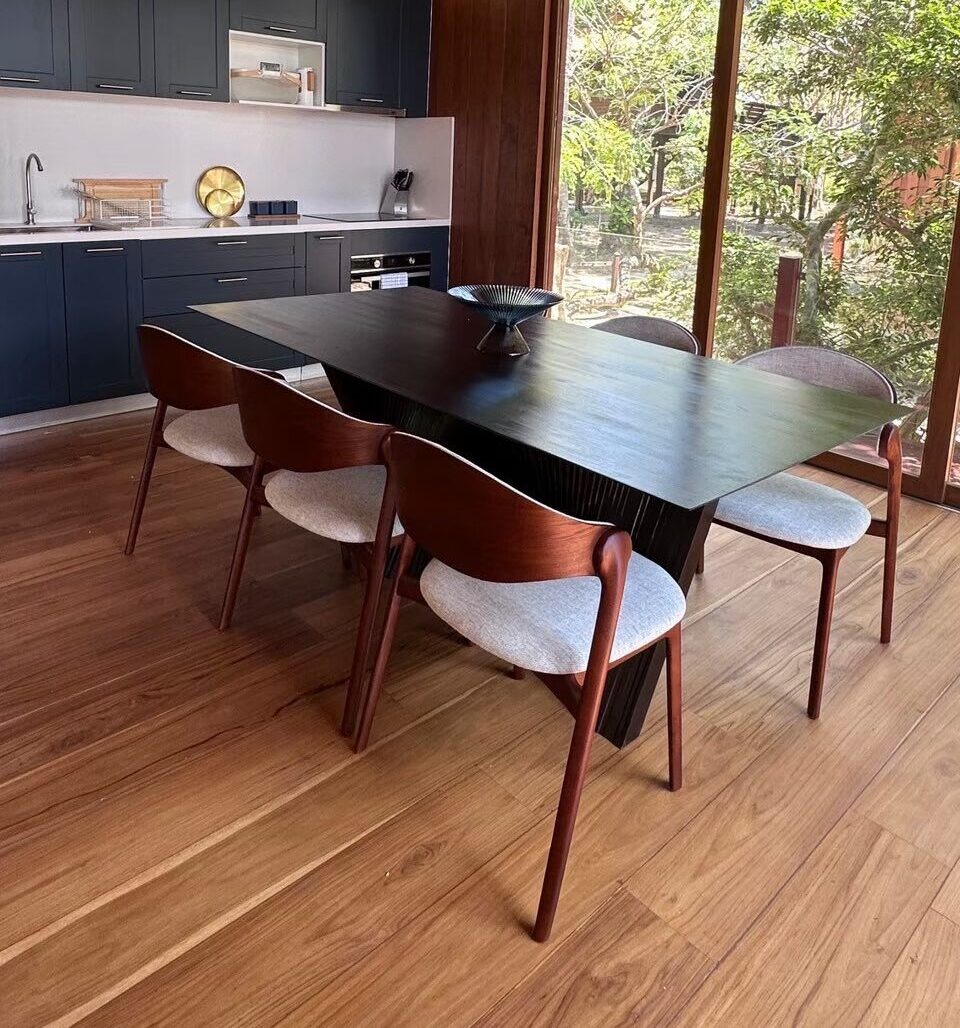
Before becoming a table, the wood may have already spent decades as part of a house.
A tabletop may once have been a floorboard or a beam. A table leg may have been a post. The rail beneath the table may have come from a smaller structural member of the house.
Even a chair can carry several different past lives within a single object.
At WoodTist, this changes the way we think about design. We do not begin only by asking: “How can we cut this wood to fit our drawing?”
We also ask: “What is this piece of wood already suited to become?”
A House Does Not Give Us One Kind of Wood
When an old timber house is dismantled, the material does not arrive as a stack of identical boards. Each part was originally made for a different purpose.
There are floors.
Beams.
Posts.
Joists.
Rafters.
Structural members of different sizes and proportions.
That previous role leaves us with timber in different dimensions and sections.
So when we reuse it, we do not see one generic material called “old teak.” We see different possibilities.
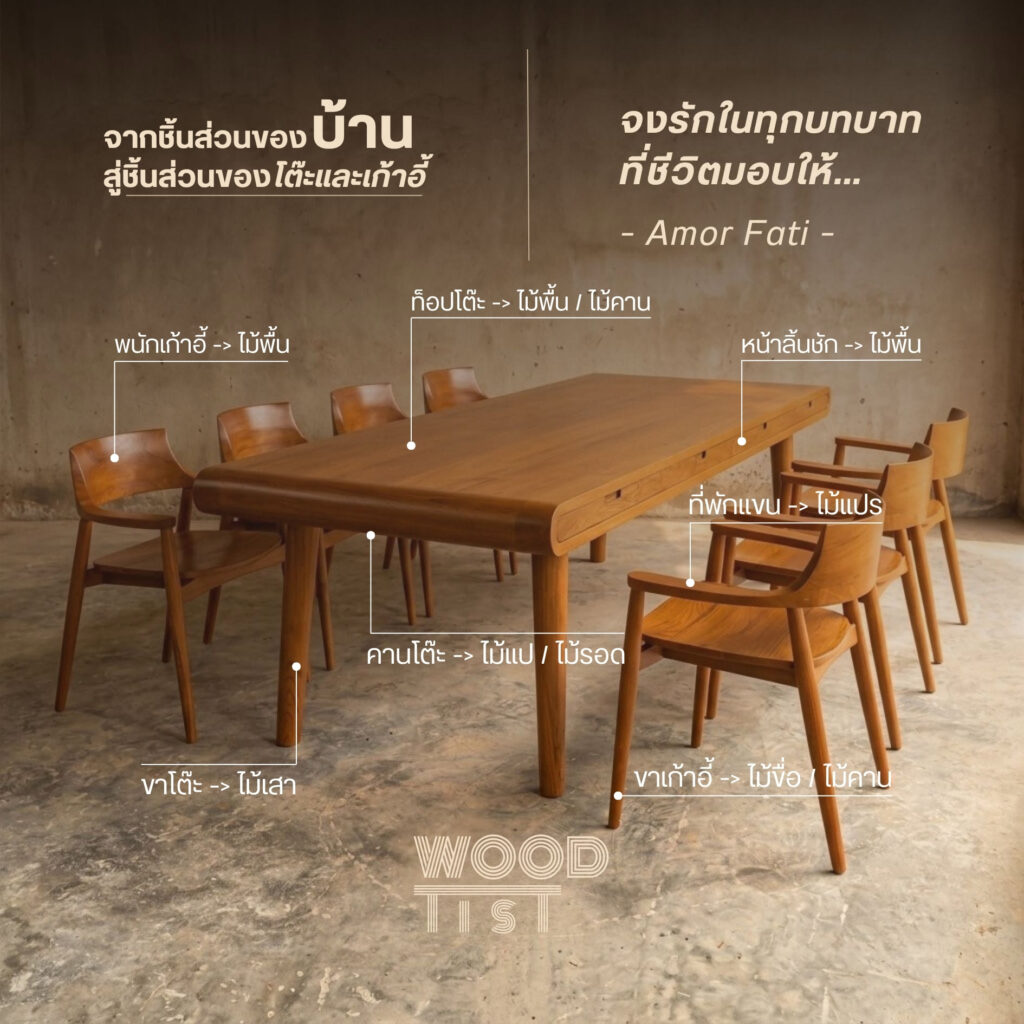
For example:
New furniture part
Former house component
Tabletop
Floorboards / beams
Table legs
Posts / beams
Table rails
Rafters / joists
Drawer fronts
Floorboards
Chair legs
Tie beams / beams
Chair backrests
Floorboards
Armrests
Sawn timber
This is not a fixed formula for every piece of furniture. It is a way of understanding how the previous form of a material can inform its next role.
A Tabletop Begins With More Than a Drawing
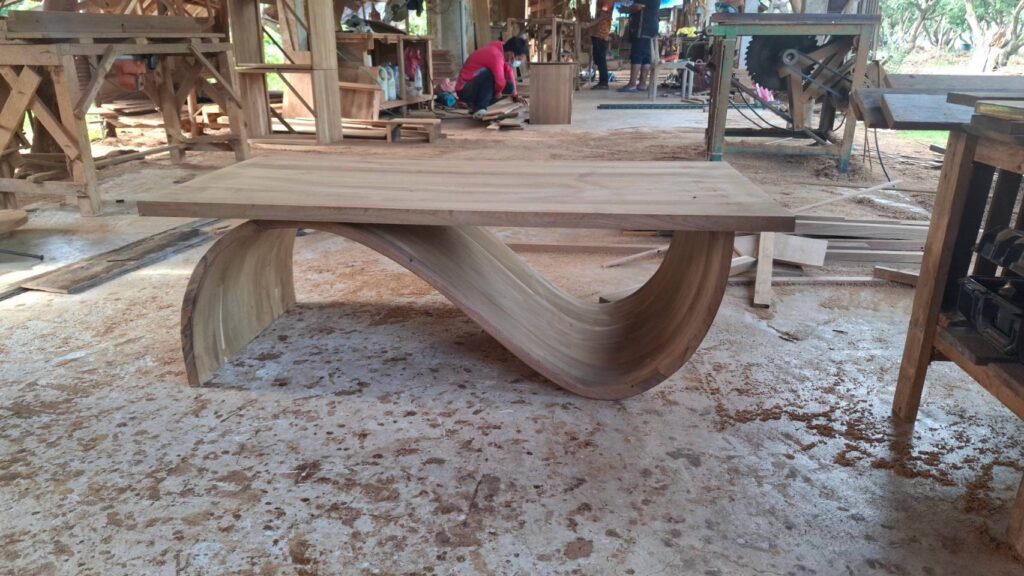
A tabletop needs a broad surface. Old floorboards naturally offer one possible starting point because of the form they already have.
Certain beams may also be selected and processed for a tabletop depending on the actual piece. But choosing the material is not simply a matter of category.
We still look at the real timber.
Its width.
Its grain.
Its tone.
Its visible marks.
And how several pieces will sit together.
The final surface therefore comes from both design intention and material reality
A Table Leg Asks for a Different Kind of Wood
A table leg has a very different role from a tabletop. Its proportion and section require a different kind of piece.
Old posts or beams may offer dimensions that are better suited to becoming legs.
Instead of cutting a large piece of timber down into a completely different form simply because the drawing demands it, we can ask whether its existing section already suggests a useful new role.
This helps us preserve more of what is already there. And that matters. Because reclaimed material has already spent decades becoming what it is.
Smaller House Components Can Find Smaller Roles
The structural rail beneath a table may come from old rafters or joists.
A drawer front can come from a former floorboard.
A chair backrest can also begin as flooring.
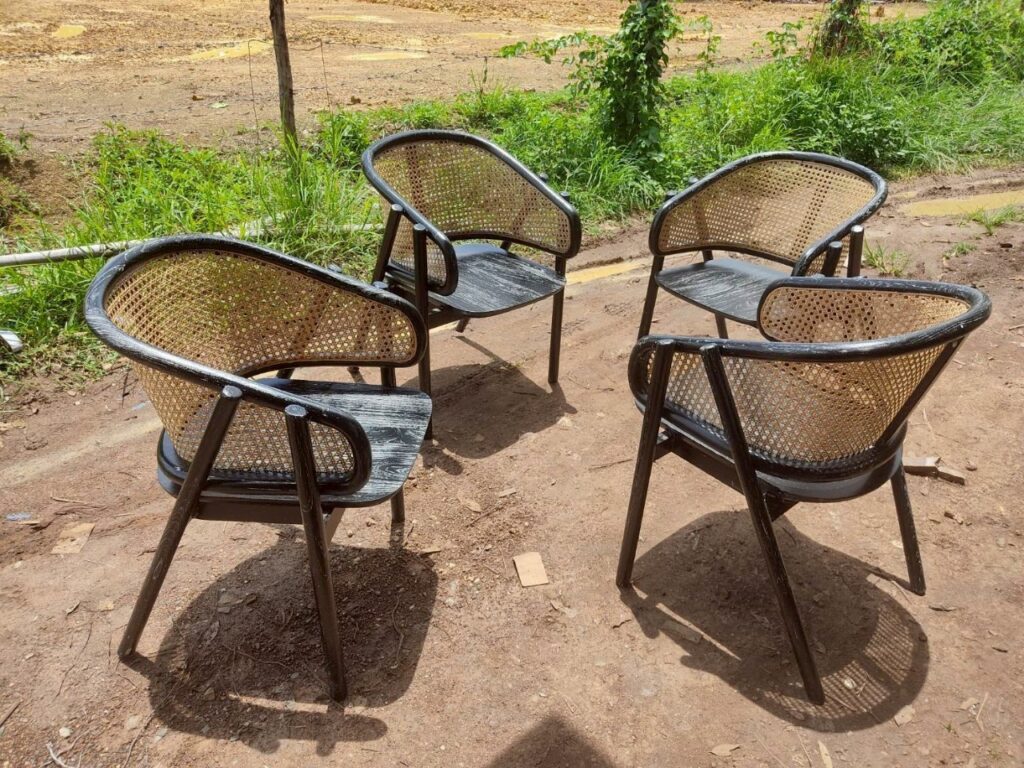
Chair legs may come from old tie beams or beams, while an armrest may be shaped from suitable sawn timber.
Seen this way, a piece of furniture becomes almost like a new arrangement of architectural fragments.
The original functions disappear. But the material continues.
But reuse alone does not explain how the material is treated.
A piece of old timber can still be cut aggressively until very little of its original proportion or surface character remains.
For WoodTist, the deeper question is: How much of the material can the design work with, rather than remove?
That means looking at: the existing section, the usable dimension, the grain, the marks, and the amount of wood that would be lost in reshaping it.
The design decision is not only about what looks good.
It is also about what makes sense for the material.
We Do Not Need Every Board to Become the Same Raw Material
Industrial production often begins with consistency. Reclaimed teak begins with difference.
One board may be wider.
Another darker.
One may show an old mark.
Another may carry a particularly expressive grain.
If the goal were to make every piece identical before we began designing, we could end up removing many of the qualities that made the material worth keeping in the first place.
So instead of asking: “How do we make every piece conform?” we ask: “How can the design respond to what each piece already offers?”
That shift may sound small. But it changes the relationship between designer and material.
Material-Led Design Is Not About Doing Less Design
Designing with the material does not mean simply leaving old wood untouched.
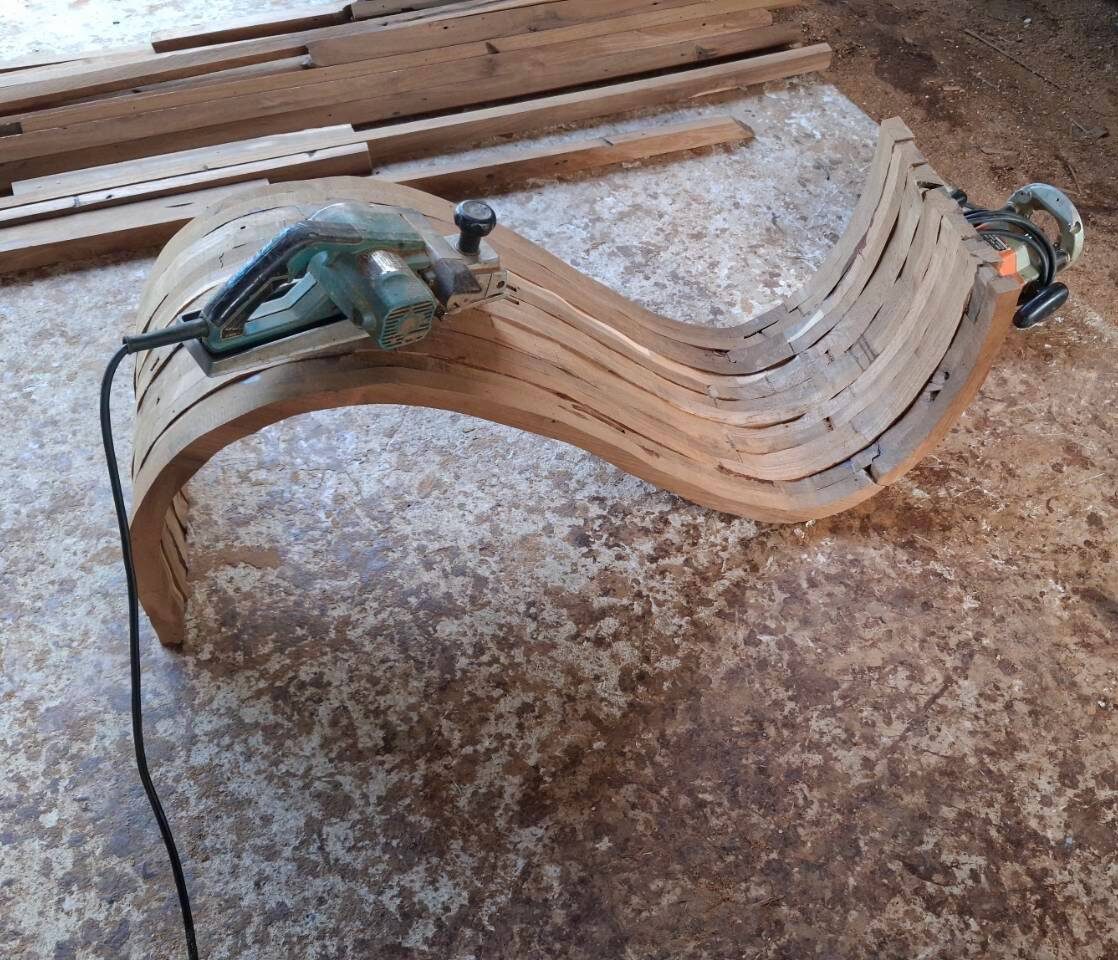
Reclaimed timber still needs to be selected, prepared, resurfaced, joined, shaped and finished.
The difference lies in what guides those decisions.
The drawing matters.
Function matters.
Craftsmanship matters.
But the material also has a voice in the process.
Its dimensions can influence proportion. Its grain can influence placement. Its existing form can suggest a new structural role.
Design becomes a negotiation between intention and reality.
From House Parts to Furniture Parts
A floorboard becomes a tabletop.
A post becomes a leg.
A rafter becomes a table rail.
A beam becomes part of a chair.
The role changes. The material does not need to lose its identity in order to become useful again.
For us, reclaimed teak is not valuable simply because it is old. Its value also lies in knowing how to read what is already there.
To see its dimensions.
Its grain.
Its marks.
Its possibilities.
And then ask one more question: What should this piece become next?
Because sometimes good design does not begin by giving a material a completely new identity. It begins by understanding the one it already has.
From House Parts to Furniture Parts.
Not Just Wood! It’s You.
Interested in designing a Reclaimed Teak Table or custom furniture? Order now via LINE: @409yiadr
FAQ
What is material-led design?
Material-led design is an approach in which the characteristics of the actual material help influence design decisions. In reclaimed timber furniture, this can include working with existing dimensions, sections, grain, marks and usable forms rather than treating every board as identical raw stock.
How does WoodTist choose which reclaimed teak becomes which furniture part?
We look at the actual piece of timber and what it previously was, then consider its size, section, grain and existing character. Different former house components can be suited to different furniture roles.
What old house parts can become a table?
In our work, tabletops may use old floorboards or beams, table legs may use posts or beams, and table rails may use old rafters or joists, depending on the actual material available.
What parts of an old house can become a chair?
Chair legs may use old tie beams or beams, backrests can use floorboards, and suitable sawn timber can be used for armrests.
Is reclaimed teak furniture made without cutting the old wood?
No. Reclaimed wood still requires preparation and shaping. The aim is not to avoid working the material, but to make design decisions that use its existing qualities intelligently and avoid unnecessary loss where possible.
Why does WoodTist not try to make every piece of reclaimed teak look identical?
Because variation is part of the actual material. Grain, tone, dimensions and traces of previous use can differ from piece to piece. Instead of treating all variation as something to erase, we allow suitable differences to become part of the design.