
Teak Is Native to This Landscape
Teak (Tectona grandis) occurs naturally across parts of South and Southeast Asia, including Thailand.
FAO records show that in Thailand, natural teak has historically been concentrated strongly in the north, extending along the western part of the country. The relationship between teak and Northern Thailand is therefore not simply commercial—it is geographical. FAOHome
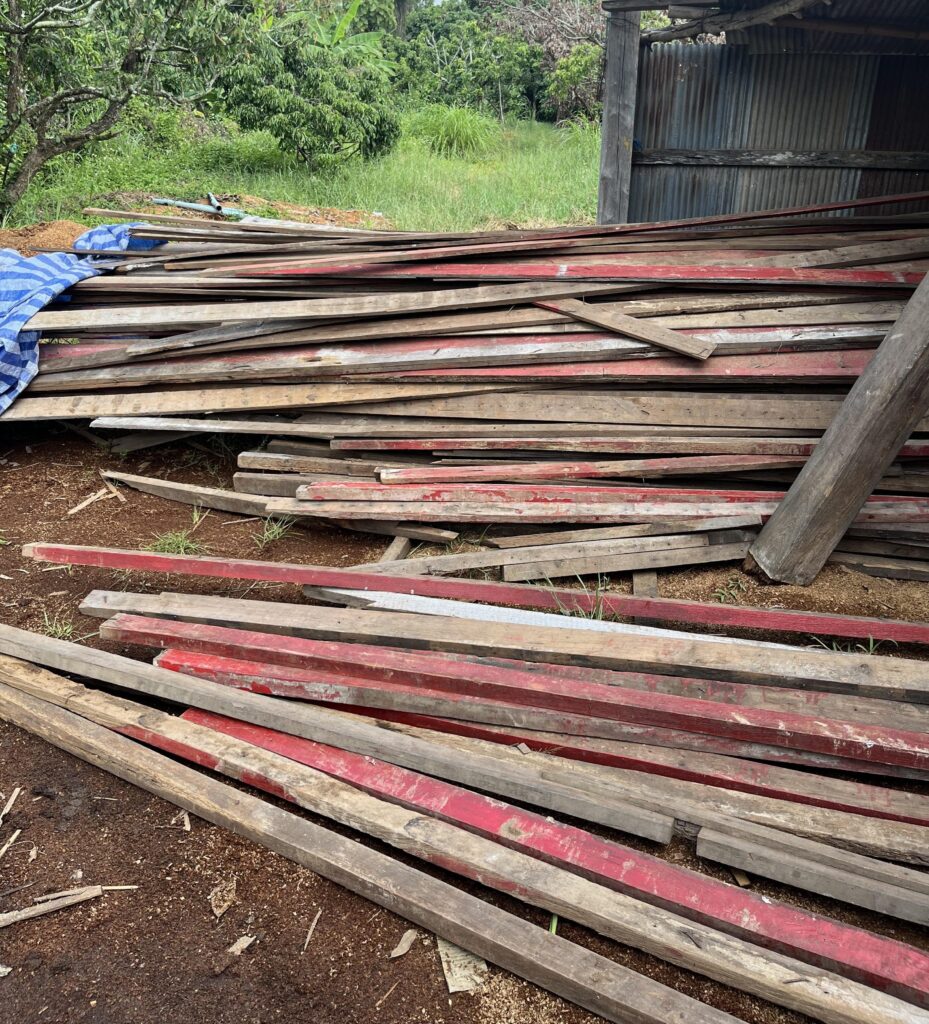
For generations, that wood entered architecture.
Into floors.
Posts.
Beams.
Doors.
Houses.
And over time, it became part of the visual and material language of the region.
This is what makes reclaimed teak different from a timber selected only from a catalogue. It comes with a place attached to it.
What Makes Teak Different From Many Other Woods?
Teak has long been valued for properties that are unusually useful in demanding conditions.
The USDA Forest Products Laboratory describes teak heartwood as having excellent dimensional stability and a very high degree of natural durability. It also notes teak’s distinctive oily feel and its historic use in boats, furniture and flooring. Forest Products Laboratory
Part of that durability comes from compounds known as extractives.
Extractives are natural substances deposited in heartwood over time and can influence characteristics such as color, odor and resistance to deterioration. US Forest Service R&D
So teak’s reputation is not simply folklore.
There is material science behind it.
But Does Old Teak Become Stronger Just Because It Is Old?
This is where the story needs more nuance. We often hear phrases like: “The older teak gets, the stronger it becomes.” That is too simple. Sun and rain do not continuously make wood structurally stronger. Weather can also degrade the surface. Age alone does not guarantee quality.
What matters with reclaimed teak is that a sound piece may already have spent decades drying, moving with seasons and reaching a relatively stable condition before we find it again.
If it remains structurally sound and has dried well, it can be an exceptionally useful material for furniture. Its advantage is not that time magically created a stronger wood. Its advantage is that the material has already lived through a long period of service—and we can evaluate what survived. That distinction matters.
Reclaimed Teak Is a Material That Has Already Proven Something
Imagine a beam that held up a house for fifty years. Or a floorboard walked on by generations. Its past does not automatically make it suitable for a new table. It still needs to be inspected. Resurfaced. Checked. Selected. Sometimes repaired.
But when the wood beneath is still sound, that history tells us something. The timber has already been tested by time. Not in a laboratory. But in life.
Sun, Rain and Time Leave Evidence
Northern Thailand has seasons of heat, humidity and monsoon rain. Old architectural timber may have lived through repeated changes in moisture for decades.
That does not mean weather made the wood invincible. What it means is that the surviving piece carries evidence of how it behaved. Teak itself has relatively good dimensional stability compared with many woods. In one comparative weathering study, teak showed relatively small dimensional change as relative humidity shifted significantly. US Forest Service R&D
For furniture makers, that matters. Because good furniture depends not only on visual beauty but on how a material moves.
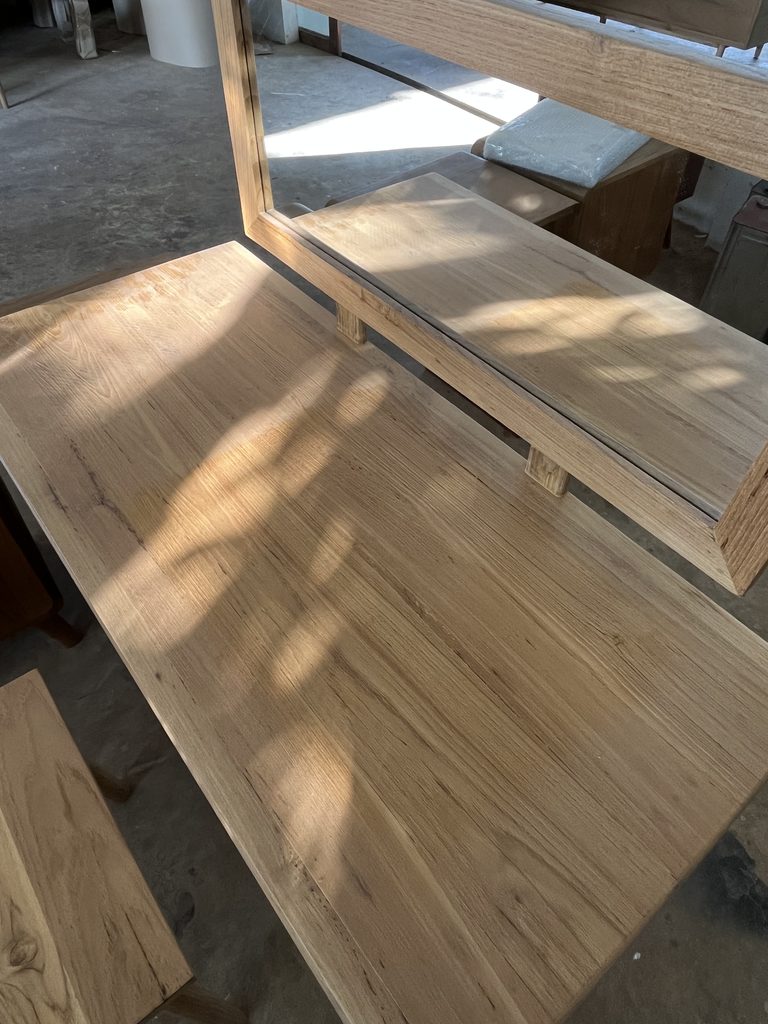
What Happens When Reclaimed Teak Meets Water?
This question becomes especially relevant in Thailand during floods. Teak is not waterproof It still absorbs and releases moisture. If submerged, it can swell. As it dries, it can shrink again. Joints may move. Finishes may change.
But solid wood also offers something important: it can often be worked on again.
A surface can be dried. Sanded. Refinished. A joint can sometimes be repaired. A solid component can sometimes be reshaped or replaced. That does not mean every flooded teak piece will survive. It means the material can have a path back when the structure remains sound.
For us, that is another kind of durability. Not “nothing can ever happen to it.”
But: “When something happens, can it still continue?”
Perhaps Longevity Is More Than Resistance
The design world often speaks about sustainability through carbon, certifications and recyclability. All of those matter. But there is another question worth asking: How many lives can a material have? A timber may begin as part of a tree. Then become a house. Then spend decades as a floor or structural beam. Then the building reaches the end of its life. And the wood becomes furniture.
This is not recycling in the sense of grinding material down and starting again. It is closer to continuation. The material changes role without losing itself completely.
From House Parts to Furniture Parts
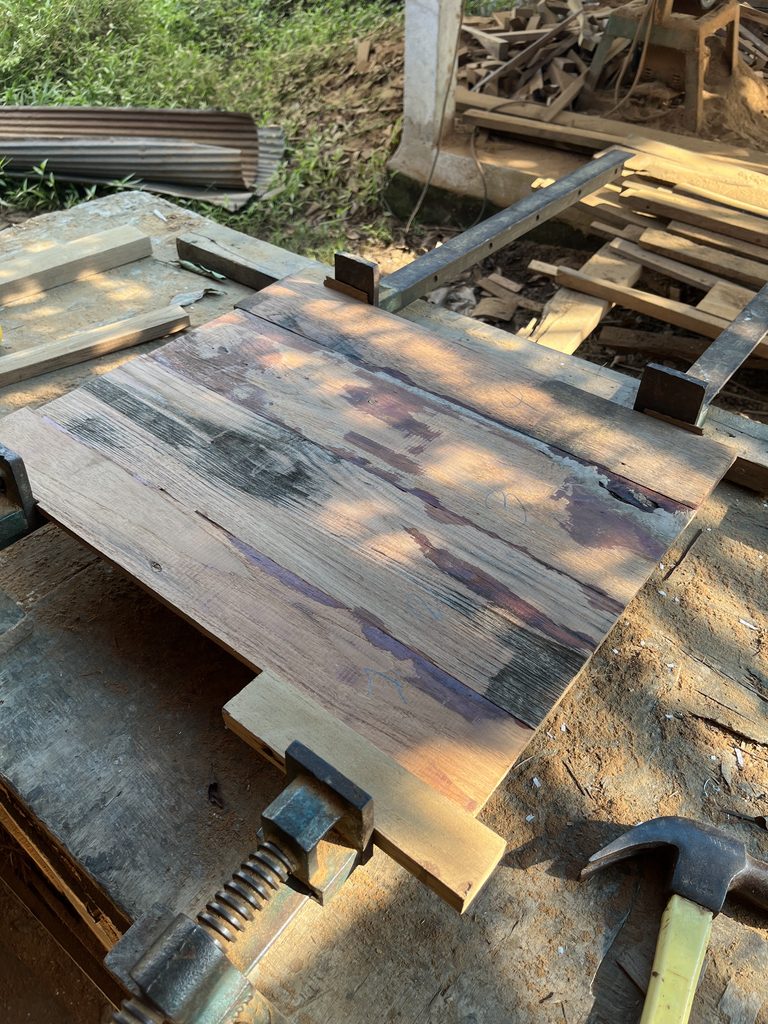
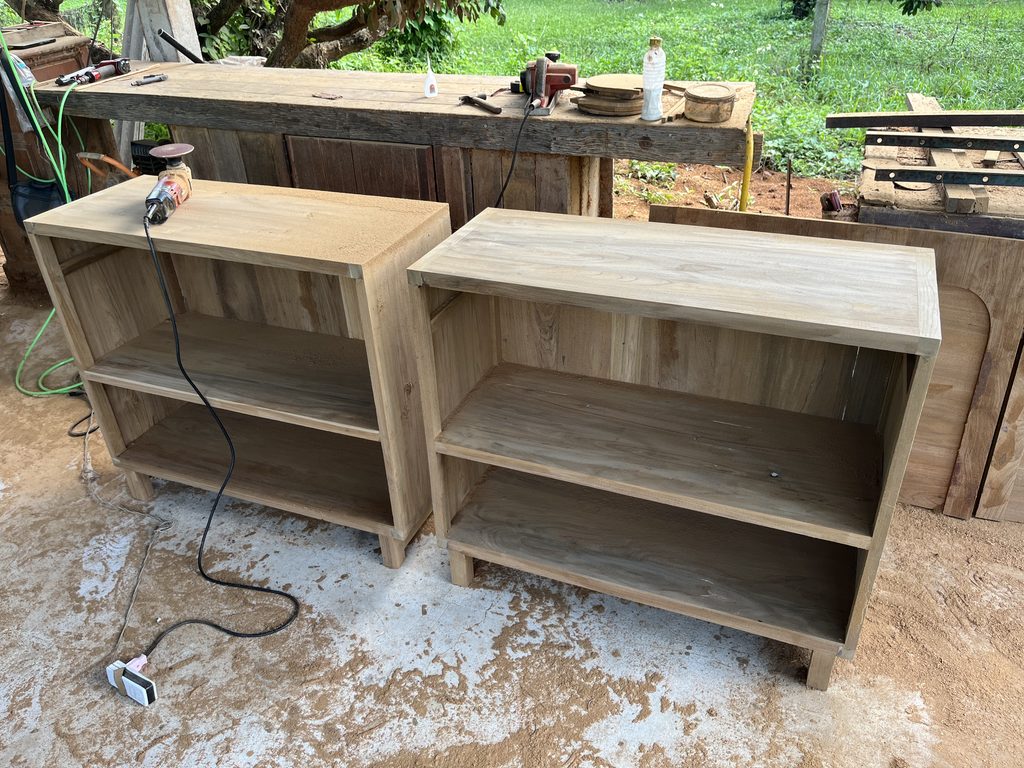
This is how we work with reclaimed teak at WoodTist. An old floorboard may become a tabletop. A post may become a table leg. A beam may become part of a chair. A piece that once helped support architecture becomes part of everyday life in another form. The process requires design, but it also requires restraint.
We cannot treat every board as identical raw stock. Its existing dimension matters. Its grain matters. Its marks matter. Its previous role can matter. Our job is not simply to ask: “How can we force this wood into our design?”
But also: “What can this piece become without losing what made it worth saving?”
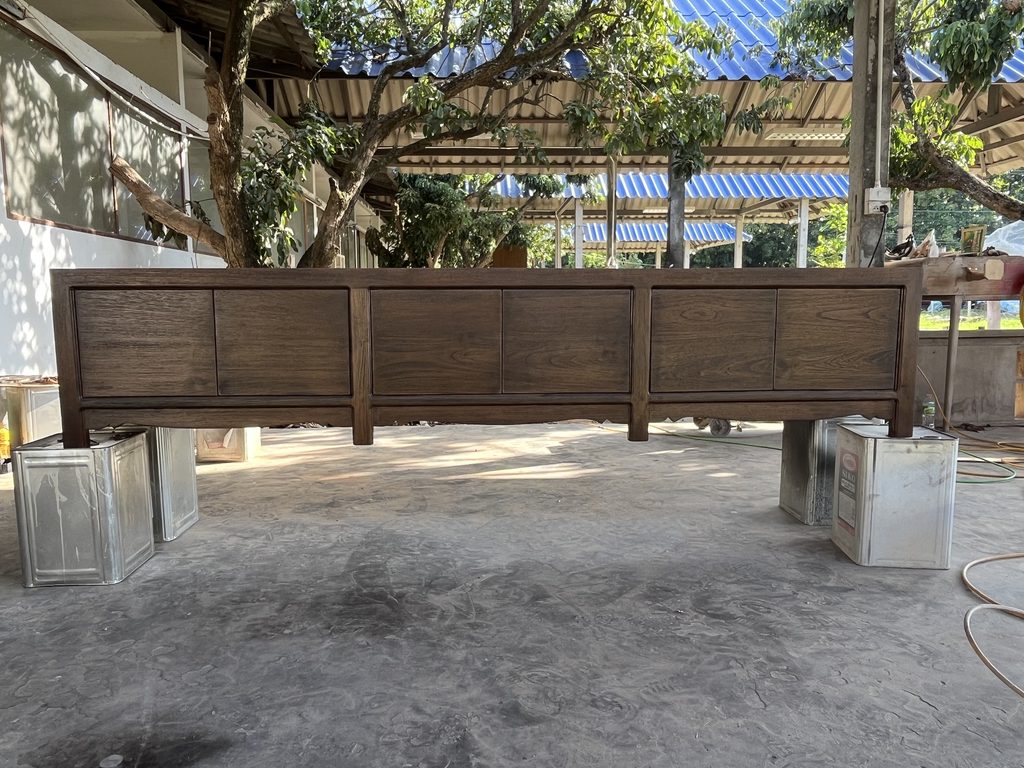
A Secret Material—But Only Because the World Has Not Looked Closely Enough
Calling reclaimed teak Thailand’s “secret material” does not mean it is rare in the way a luxury stone might be rare. The secret is different. It is the knowledge surrounding it. Where it came from. How people built with it. How local craftsmen understand it. How an old house can be dismantled without automatically turning every timber into waste. And how those pieces can move into contemporary design.
For someone outside Thailand, reclaimed teak may look exotic. For us, its value comes from being deeply local.
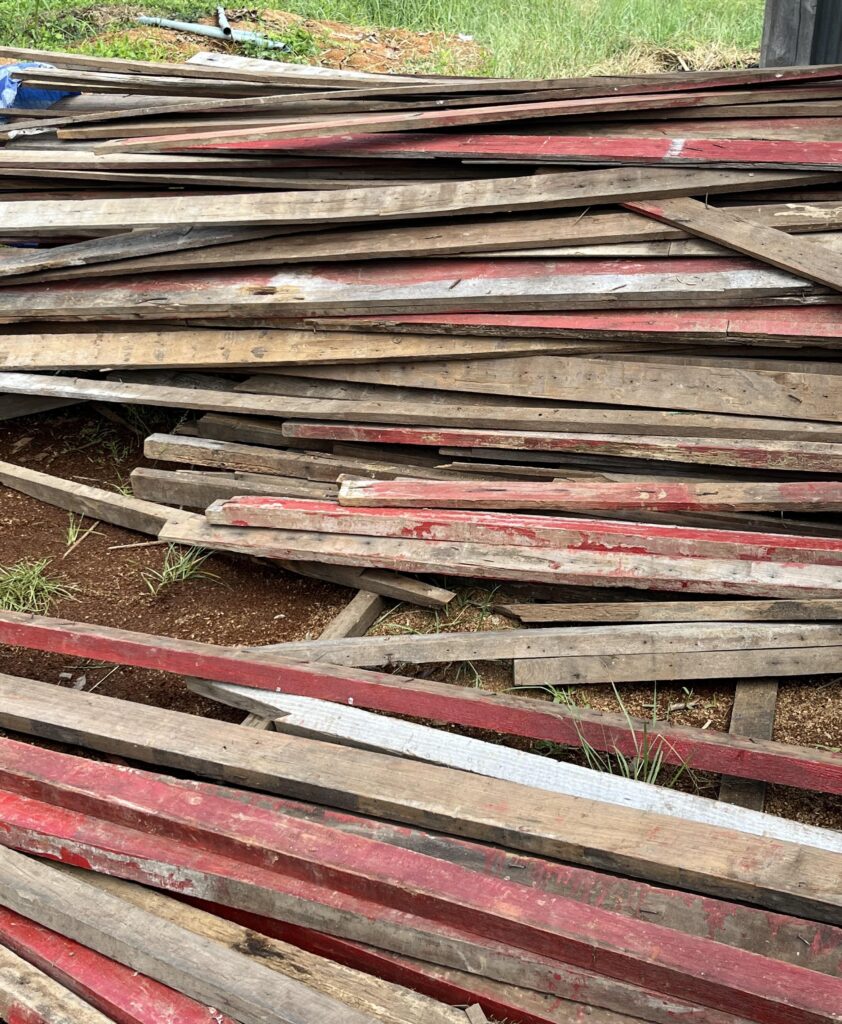
Why This Matters to Thai Design Too
There is an irony in design. We often look outward to understand what is beautiful.
Oak. Ash. Beech. Walnut. Travertine. Imported references become the language of contemporary interiors.
Meanwhile, a material with its own regional history may be sitting only a few kilometers away.
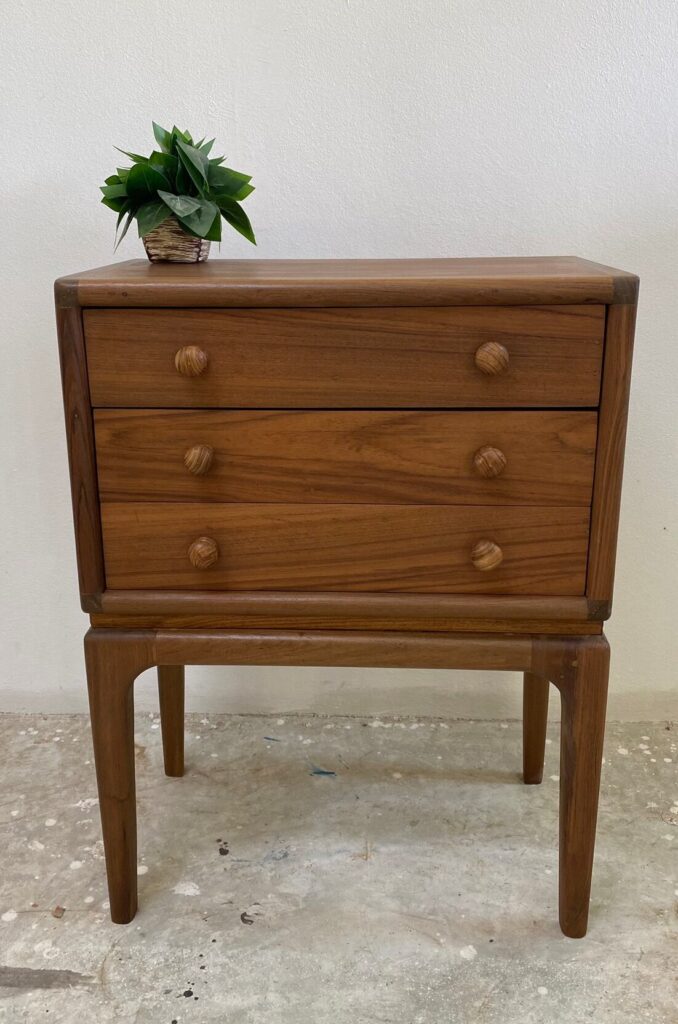
WoodTist does not believe teak needs to imitate oak to be contemporary. It does not need to be bleached until it forgets what it is. It can be teak—with its own grain. Its own warmth. Its own history. Its own place.
Contemporary design does not have to erase local material identity. It can reveal it.
Natural Beauty Does Not Mean Untouched
We often say: #WoodTist We believe in natural beauty. But natural beauty does not mean we simply take an old beam and place it in a room. Reclaimed teak still needs craftsmanship. Selection. Planing. Sanding. Joining. Repair. Finishing. Design.
What we try not to remove unnecessarily is identity. A natural mark that can remain. A grain worth showing. A section that can be reused rather than cut away.
The beauty is not in avoiding transformation. It is in transforming with understanding.
The Material Has a Past. The Owner Gives It a Future.
This is why reclaimed teak belongs so naturally to WoodTist. The material already has a story. The owner has another. Furniture becomes the point where those two stories meet. An old structural beam becomes part of a dining table. A floorboard becomes the surface where a new family eats together. A material that once belonged to one house enters another. Not as an imitation of the past.
But as something contemporary. Something usable. Something personal.
WoodTist is one expression within Baan Sala Mai built around reclaimed teak, identity, story, craftsmanship and natural material.
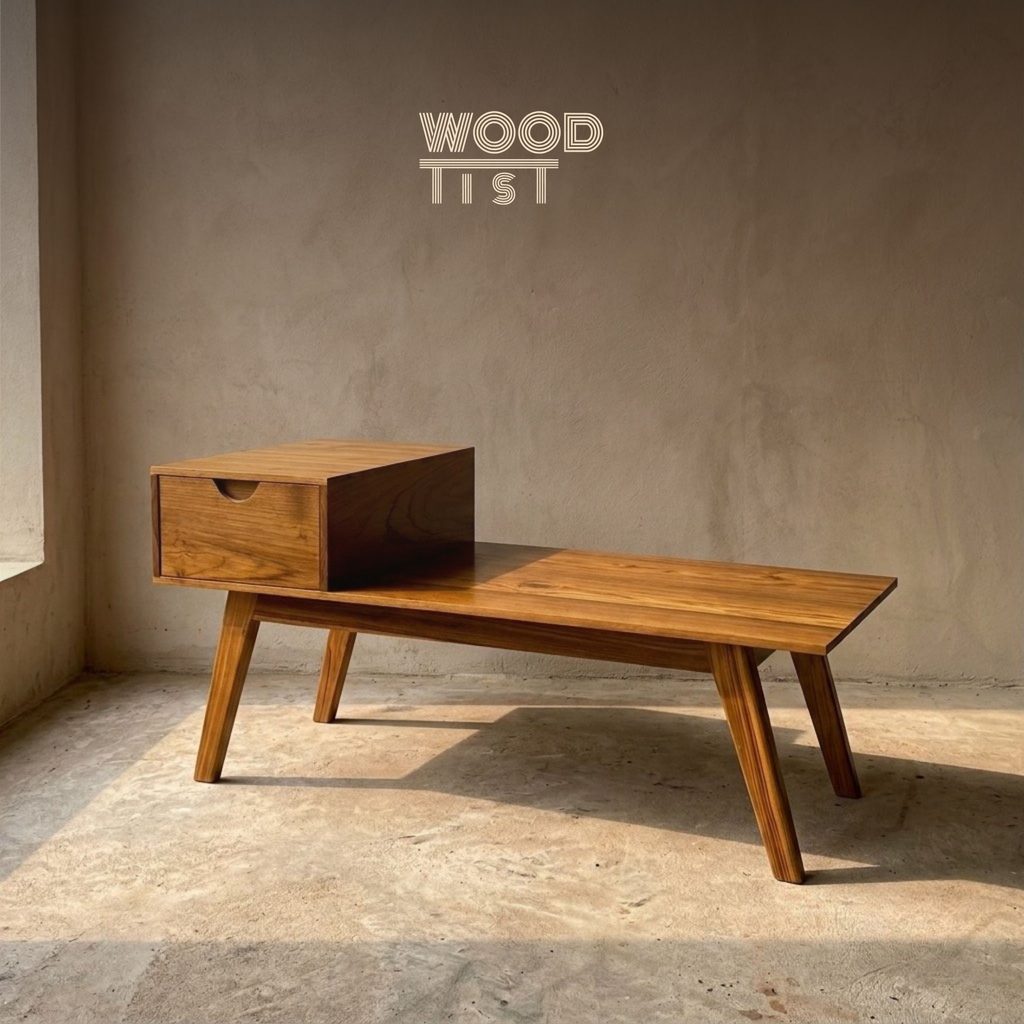
Maybe Thailand Does Not Need to Invent Its Next Material
Maybe some of it is already here. In old houses. In dismantled structures. In the hands of craftsmen who know what a beam can still become.
The opportunity is not simply to preserve everything because it is old. It is to recognize what still has value. To inspect it. Understand it. Use it intelligently. And allow a local material to speak in a contemporary language.
That is how reclaimed teak becomes more than old wood. It becomes a material of place. A material of memory. And a material with another life still ahead.
Not Just Wood! It’s You.
Interested in designing a Reclaimed Teak Table or custom furniture?
Order now via LINE: @409yiadr
FAQ
Is teak native to Thailand?
Yes. Thailand lies within the natural range of teak, with historically important natural teak forests concentrated especially in the north and parts of the west. FAOHome
Why is teak naturally durable?
Teak heartwood has high natural durability, and extractives within the heartwood contribute to characteristics associated with resistance to deterioration. Forest Products Laboratory
Does teak become stronger the older it gets?
Not automatically. Age itself does not continuously increase structural strength. The advantage of sound reclaimed teak is that it may be well seasoned and dimensionally settled after decades of service, but each piece still needs to be inspected individually.
Is reclaimed teak waterproof?
No. It can absorb and release moisture. Teak is valued for natural durability and dimensional stability, not total waterproofness. Forest Products Laboratory
Can reclaimed teak survive flooding?
Some solid teak pieces can potentially be dried, assessed and repaired after water exposure if the structure remains sound, but survival depends on duration of submersion, construction, contamination and drying conditions. It should never be described as flood-proof.
Why is reclaimed teak especially relevant to Northern Thailand?
Northern Thailand is historically one of the country’s key natural teak regions, and teak became deeply connected with local architecture, forestry and craftsmanship over time. FAOHome
What makes reclaimed teak sustainable?
Its sustainability value can come from extending the useful life of existing timber rather than treating it as waste. However, responsible sourcing and evidence of legal provenance still matter; “reclaimed” alone should not be treated as proof of sustainability.