

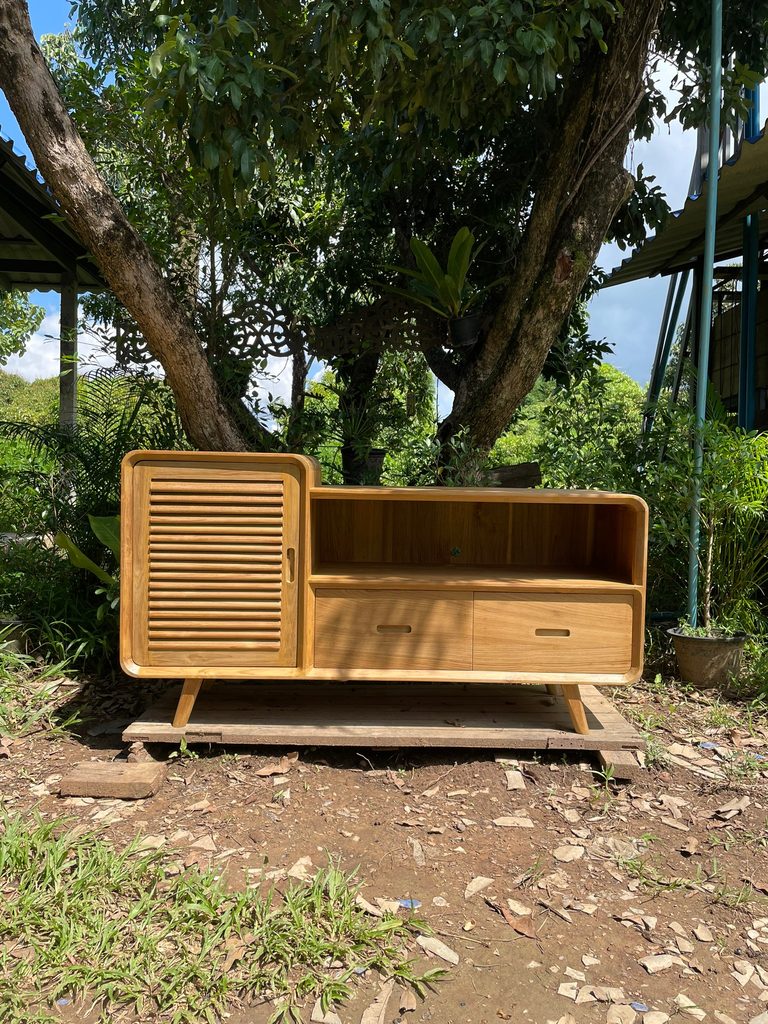
Teak Is Naturally Durable
The USDA Forest Products Laboratory describes teak heartwood as having excellent dimensional stability and a very high degree of natural durability.
It also describes the wood as having a distinctly oily feel and notes its long-standing use for boats, flooring, furniture and other demanding applications. Forest Products Laboratory
That matters because outdoor performance is not created only by a coating applied at the end.
Some of it begins much earlier — inside the material itself.
Water-Resistant Is Not the Same as Waterproof
Wood is hygroscopic. It interacts with moisture in the surrounding environment.
When it gains moisture, it can swell.
When it loses moisture, it can shrink.
Teak does this too. The difference is not that teak ignores water. It is that teak has particularly good dimensional stability, meaning that its movement in response to moisture tends to be relatively restrained. USFS Research & Development
This distinction matters. When we say teak “handles water well,” we do not mean: water cannot enter the wood.
We mean: the wood has properties that help it remain comparatively stable under changing moisture conditions.
Teak Does Not Move as Much as Many Woods
Historic USDA data has long described teak as a low-shrinkage, dimensionally stable timber. One reported set of values for forest-grown teak showed shrinkage from green to oven-dry of approximately 2.3% radially and 4.2% tangentially.
The same source notes that teak responds relatively little even when atmospheric humidity changes substantially. Forest Products Laboratory
For furniture design, that makes a real difference.
A tabletop is never simply a rectangle.
A cabinet door is never simply a flat panel.
Real wood wants to move. Good material choice helps us design with that movement rather than constantly fight against it.
So What Does “Reclaimed” Add?
This is where we need to avoid a common simplification. Reclaimed teak is not durable simply because it is old. Its fundamental durability comes first from being teak—particularly good-quality heartwood.
But old timber that has already dried and spent many years in service may also be well seasoned and dimensionally settled.
Wood science tells us that properly dried wood tends toward a moisture level that balances with its surrounding environment, and controlling moisture reduces undesirable dimensional change in service. USFS Research & Development
So when we find reclaimed teak that is sound, dry and suitable for reuse, we are working with a material that has already lived through a long physical history. That history matters. But it does not make the wood indestructible.
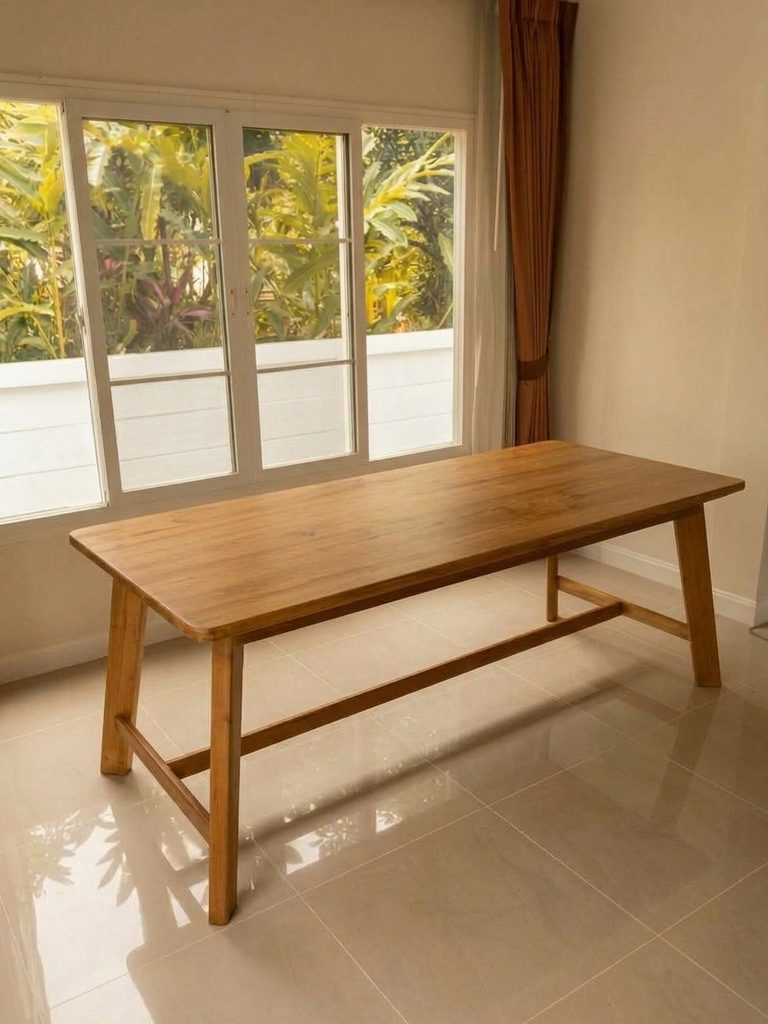
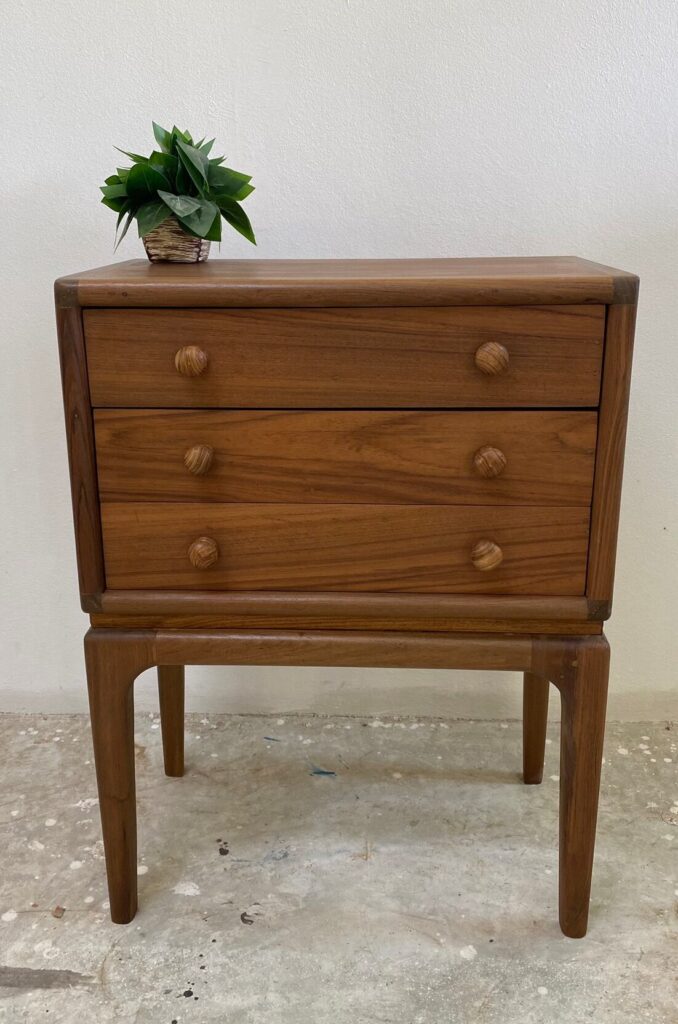
Can Reclaimed Teak Be Soaked in Water?
It can get wet. It can survive periods of water exposure.
That is not the same as saying: “Leave it submerged forever and nothing will happen.”
If teak remains in water, it can still gain moisture. Joints can move. Finishes can be affected. And repeated wetting and drying still places stress on the surface and construction.
So the more useful question is not: “Can teak be soaked?”
It is: “How does teak respond when it gets wet, and can the furniture recover when it dries?”
That is a much more material-aware way of thinking.
What About Rain?
Rain creates a cycle.
Wet.
Dry.
Wet again.
Dry again.
Every cycle changes the moisture conditions around the furniture. Teak’s stability helps it manage these changes relatively well, but design still matters enormously.
Outdoor furniture should avoid details that trap water. Horizontal surfaces should allow drainage. End grain and joints should not remain permanently wet. Air should be able to circulate.
The Forest Products Laboratory emphasizes that long exterior service life depends not only on wood species but also on design, moisture management and appropriate finishing. USFS Research & Development
In other words: a durable material still deserves intelligent design.
Sunlight Changes Teak Too
Outdoor teak is often described as “weather resistant.”
Sometimes that phrase is misunderstood to mean: “It will always look exactly the same.”
It will not. Sunlight—especially UV radiation—gradually changes the surface chemistry of wood. Moisture, sunlight, heat and biological factors all contribute to weathering. The wood can lighten, grey, become rougher at the surface, or develop fine surface checking over time. USFS Research & Development
This does not automatically mean the furniture has failed. It means the surface is recording exposure.
The Silver-Grey Surface Is Not the Same as Rotten Wood
One of the beautiful—and sometimes misunderstood—things about outdoor wood is that appearance and structural condition are not always the same. A teak surface can gradually become grey from weathering while the material beneath remains serviceable.
Whether you love that patina or prefer the warmer golden-brown tone is a matter of taste. But they require different approaches. If you want to keep the warm tone longer, the surface will generally require appropriate finishing and maintenance. If you allow it to weather naturally, you should expect its appearance to change.
Neither choice is automatically more “natural.” The important thing is knowing what you are choosing.
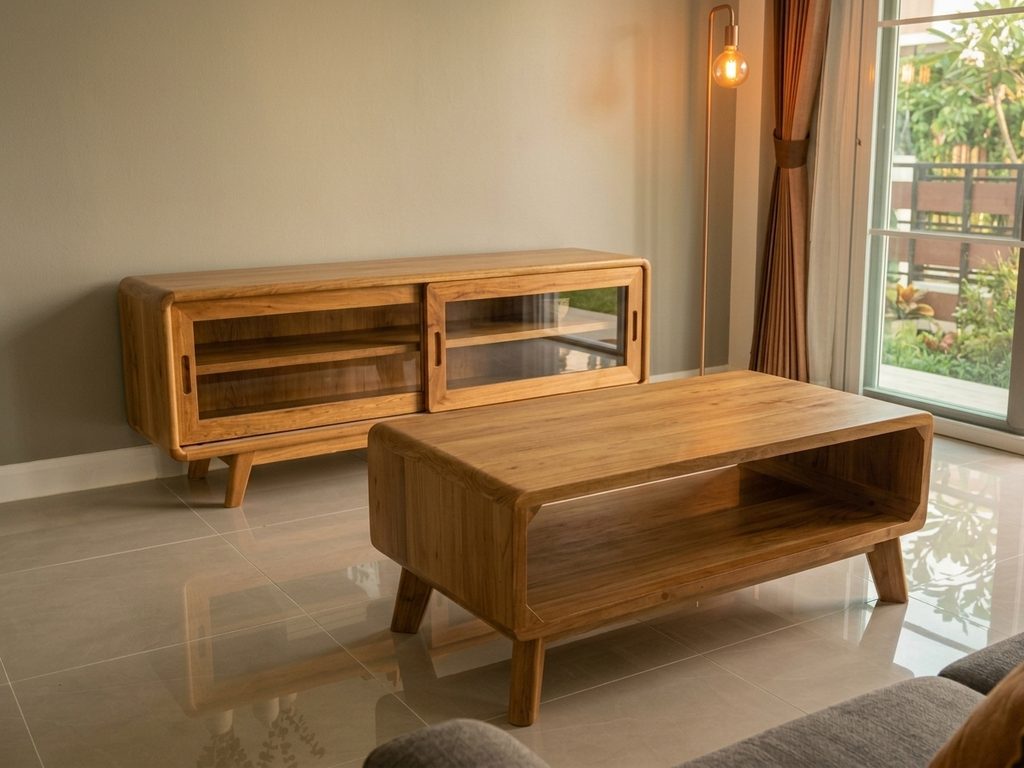
At WoodTist, Natural Beauty Does Not Mean “Never Changing”
This connects directly to how we think about natural materials. We believe in natural beauty. But natural beauty is not the same as permanent appearance. A natural material responds to:
sun,
water,
humidity,
touch,
and time.
That is part of what makes it natural.
So when WoodTist says: we create according to the nature of the material,
we do not mean simply leaving the wood untouched.
We mean understanding its behavior before deciding what to ask of it.
WoodTist’s brand itself is built around reclaimed teak, natural material, craftsmanship and design as part of its distinct expression within Baan Zhalha Mai.
Durability Is Not the Same as Invulnerability
This distinction matters. A durable material is not a material that can never be damaged. Durability means it has properties that allow it to perform well under demanding conditions.
But even teak benefits from:
good drainage,
appropriate joints,
air circulation,
the right finish for the intended appearance,
and periodic care.
A beautiful material should not become an excuse for careless design.
Why This Matters When Choosing Furniture
When we choose furniture, it is easy to ask:
What color is it?
What style is it?
Does it fit the room?
But for furniture that will live outdoors—or in spaces exposed to weather—we should also ask:
What happens when it gets wet?
How much does the material move?
Will sunlight change its color?
Can the surface be refinished?
Can damaged parts be repaired?
These questions do not make design less beautiful. They make design more informed.
Reclaimed Teak Has Already Had One Life
Perhaps this is why reclaimed teak feels so appropriate to WoodTist.
It does not arrive as a blank material.
It already carries evidence of time.
Weather.
Use.
A previous structure.
And then we ask it to become something new.
Not because it is indestructible. But because there is still value in what the material can do. A former floorboard can become a tabletop. A post can become a table leg. A piece that once helped hold up a house can enter a new life as furniture. And through all of that, the material still behaves like wood.
It responds.
It changes.
It ages.
Good Design Begins With That Understanding
The question is not: “How do we force teak never to change?”
It is: “How do we design beautifully around the way teak naturally behaves?”
That shift is at the heart of material-led design.
It is why we care about where the wood came from.
Why we study its grain.
Its section.
Its moisture.
Its marks.
And why we do not see weathering as simply a failure to keep something new.
Sometimes longevity comes from accepting that an object can change—and still remain worth keeping.
Not Just Wood! It’s You.
Interested in designing a Reclaimed Teak Table or custom furniture?
Order now via LINE: @409yiadr
FAQ
Is reclaimed teak waterproof?
No. Teak can absorb and release moisture. Its advantage is its high natural durability and excellent dimensional stability, not complete waterproofness. Forest Products Laboratory
Can reclaimed teak furniture get wet?
Yes. Teak is well suited to moisture exposure compared with many woods, but prolonged saturation can still affect the wood, joints and finish. Furniture should be designed to drain and dry properly.
Can teak furniture stay in the rain?
Teak is widely suited to exterior use, but repeated wetting and drying will weather the surface. Good drainage, construction and maintenance still matter. USFS Research & Development
Does sunlight damage teak?
Sunlight changes the surface. UV exposure contributes to color change and surface weathering, even in durable wood species. USFS Research & Development
Why does teak turn grey outdoors?
Outdoor weathering gradually changes the wood surface through sunlight and moisture exposure. A grey patina is therefore not automatically a sign that the wood has structurally failed.
Is reclaimed teak more weather-resistant than new teak?
Not simply because it is older. Teak’s inherent durability comes from the species and quality of the wood. Sound reclaimed timber may also have the advantage of being well seasoned and dimensionally settled, but each piece still needs to be evaluated individually.
Should outdoor teak be coated?
That depends on the appearance and maintenance level you want. Exterior finishes can slow moisture uptake and color change, but finishes themselves weather and require maintenance. USFS Research & Development