After the Flood: What Happens to Reclaimed Teak Furniture — and Can It Live Again?

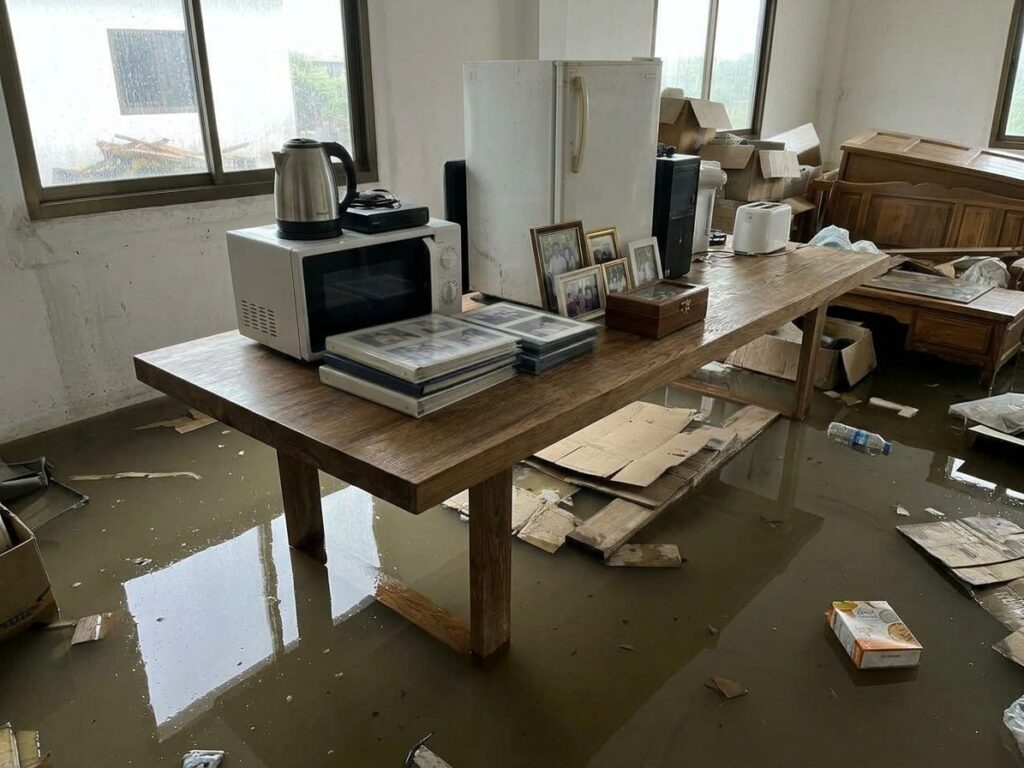
เฟอร์นิเจอร์โดนน้ำท่วม

What happens to reclaimed teak furniture when a home floods?

It is probably not a question we think about when choosing furniture. We usually think about form. Color. Dimensions. How it fits into a room.

But when water enters a home, another question suddenly becomes much more important: What is the material actually capable of?

How does it respond to water? Can it be repaired? Can it return to use after an event it was never designed to face?

For WoodTist, this is why understanding material matters as much as shaping it.

783753608 1093283490316972 5583866401826620268 n

When Wood Meets Water

Wood is not dimensionally static. It exchanges moisture with its surroundings.

As wood gains moisture, it can swell. As it loses moisture, it can shrink. Changes in moisture content are therefore closely connected to dimensional movement in wood. Forest Service R&D

During a flood, the situation is more extreme. Water can move beyond the surface and into the wood itself, as well as into joints and hidden areas.

A drawer that moved smoothly before may become tight.
A door may no longer align perfectly.
A board may cup or warp.
A finish may turn cloudy or begin to fail.

And as the piece dries, stresses created by uneven moisture loss can sometimes lead to splitting or further distortion.

But wet does not automatically mean lost.
img 4195

Flooded Does Not Always Mean Finished

Guidance on restoring flooded wooden furniture notes that some solid wood pieces can be salvaged through proper cleaning, controlled drying and repair. Center for Technology Outreach

This distinction matters to us. Because there is a difference between a product that becomes waste once it is damaged and an object that can be assessed, repaired and allowed to continue its life.

That does not mean every flooded piece can or should be saved. Contamination, structural damage, prolonged saturation and the construction of the furniture all matter.

But it means the first question does not always have to be: “Should we throw it away?”

Sometimes it can be: “What is still here, and what can be repaired?”
First: Protect People, Not Furniture

Floodwater may contain sewage, microorganisms, chemicals and other hazards.

Before handling furniture, the building itself must be safe to enter, electrical hazards must be addressed, and appropriate protective equipment should be used during cleanup. US EPA

A beautiful chair is not worth risking your health for.

Material care begins with human care.

What Should You Do Once the Water Recedes?

If the area is safe, the goal is to remove standing water, contamination and trapped moisture as soon as possible.

For wooden furniture, practical restoration guidance recommends removing drawers, doors and other detachable parts where possible so air can circulate around them. Mud and loose dirt should be cleaned away, and the piece should be moved to a ventilated place to begin drying. Center for Technology Outreach

If a drawer has swollen and become stuck, do not force it aggressively.

Wet wood is already under stress.

Adding mechanical damage does not help.

Dry Soon — But Do Not Shock the Wood

Flood guidance often says to dry wet materials within 24–48 hours.

That number is primarily about reducing the risk of mold growth. EPA notes that wet furnishings and building materials should be cleaned and drying should begin quickly because prolonged moisture creates conditions for mold. US EPA

But there is another side to drying solid wood:

drying too aggressively can create its own problems.

For soaked wooden furniture, restoration guidance recommends slow drying away from direct sunlight to reduce the chance of warping and splitting. Fans, ventilation and dehumidification can help move moisture out of the material. Thorough drying can take weeks or longer depending on the piece. Center for Technology Outreach

So the principle is:

Start drying early.
Do not force the wood dry violently.

Do Not Rush to Make It Beautiful Again

After a flood, it is tempting to fix what we can see.

Sand the stain.

Apply a new finish.

Make the surface look normal again.

But surface appearance is not the first priority.

The wood needs time to dry.

Its joints need to be evaluated.

Its structure needs to settle.

Moisture inside the material should be addressed before cosmetic refinishing begins.

Wood naturally moves toward moisture equilibrium with the surrounding air, and proper moisture control is central to minimizing dimensional problems. Forest Service R&D

Sometimes the most responsible restoration decision is simply:

wait.

What Should Be Checked After the Furniture Is Dry?

Once the piece has dried thoroughly, look beyond the finish.

Ask:

Are the joints still tight?

Has the tabletop warped?

Do doors and drawers still align?

Have new cracks appeared?

Has the finish lifted, whitened or peeled?

Is there mold or a persistent musty smell?

Is the structure still safe to use?

Solid wood pieces with limited warping can sometimes be repaired, while more severe damage—or damage involving veneers or composite construction—may require specialist assessment. MSU Extension

Repair begins with understanding what actually changed.

What About Reclaimed Teak Specifically?

This is where we need to be careful.

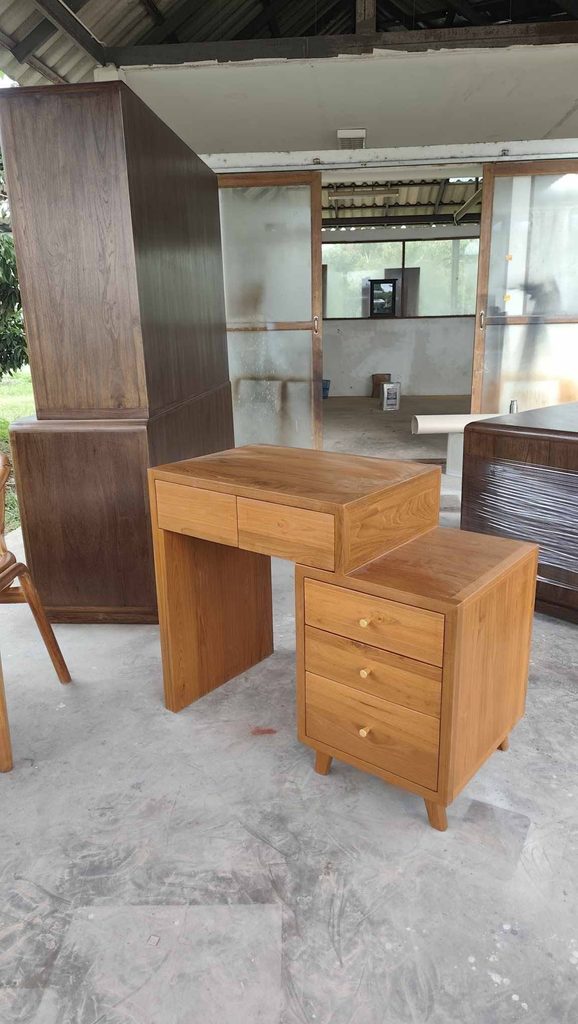
Reclaimed teak has already lived a long material life. It has often been in service for decades before being made into furniture again.

But that does not mean we should claim:

“Reclaimed teak cannot be damaged by floods.”

Or:

“Old teak is waterproof.”

It is still wood.

It can still absorb moisture and move.

How well a particular piece survives depends on far more than age alone: duration of immersion, contamination, construction, joints, finish and how the piece is dried all matter.

What reclaimed solid wood can offer, however, is the possibility of repairability.

A damaged surface can sometimes be refinished.

A joint can sometimes be repaired.

A solid component can sometimes be reshaped or replaced.

The exact outcome depends on the individual piece, but this capacity to be worked on again is part of what makes material knowledge important.

Maybe Durability Is Not Only About Never Being Damaged

We often define durability as:

“It never changes.”

But with natural material, that may be too narrow.

Another definition could be:

“When something happens, can it recover?”

Can it be opened?

Dried?

Inspected?

Repaired?

Refinished?

Returned to use?

This does not make a piece indestructible.

It makes repair part of its possible future.

Before Buying Your Next Piece of Furniture, Ask a Different Question

We are not saying:

“If you are afraid of floods, buy furniture from us.”

A disaster should never become a sales argument.

Instead, we want to leave one question with you.

The next time you choose a piece of furniture, do not ask only:

Does it look beautiful?

Also ask:

What is this material like?

How does it behave around moisture?

If something goes wrong, can it be repaired?

Can parts be replaced?

Can a craftsman work with it again?

And after a difficult event, does it have a reasonable chance of becoming useful once more?

Because good furniture may not only be about making a home beautiful on an ordinary day.

Sometimes it is about having objects made from materials we understand well enough to care for, repair and keep when life becomes less ordinary.

813966713 1398868529106701 187815861692497009 n

Material Knowledge Is Part of Design

At WoodTist, we often talk about designing according to the nature of the material. Flooding reveals why that matters. Material is not simply what gives furniture its appearance. It determines how an object responds to the world around it. To humidity. To heat. To water. To time. And sometimes, to events no one planned for.

Understanding material does not make us able to control nature. It simply helps us make better decisions before and after it changes our lives.

To everyone affected by flooding, WoodTist sends our care and concern. May you, your family and your home stay safe, and may recovery come one step at a time.
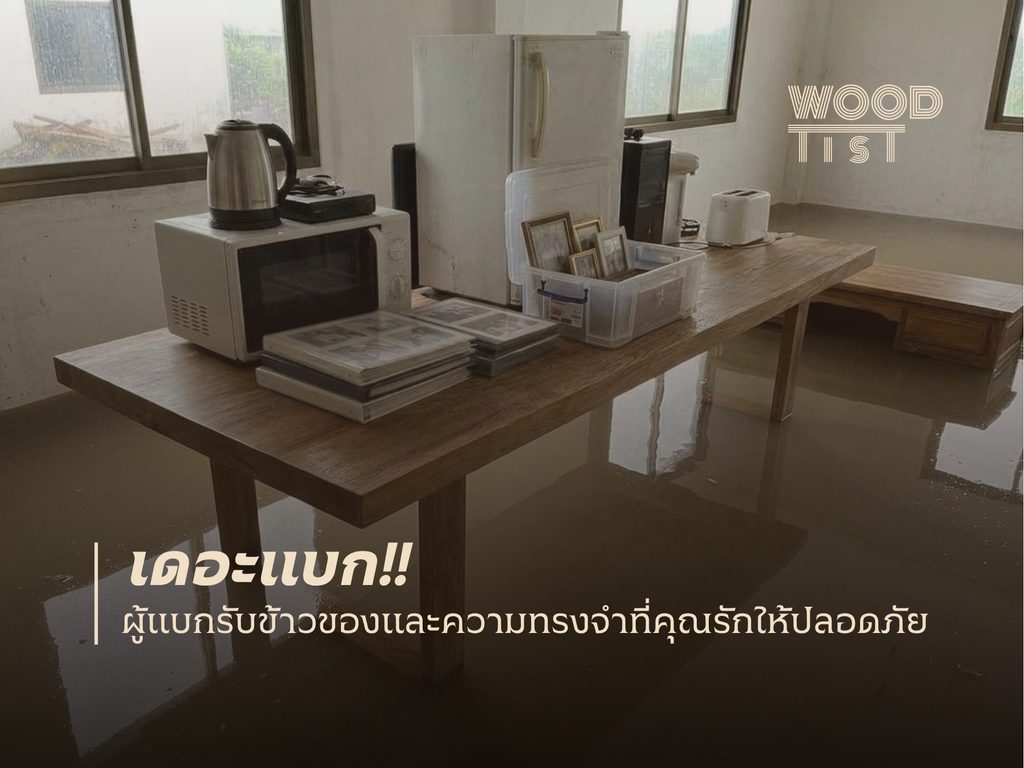
แบกรับข้าวของและความทรงจำที่คุณรักให้ปลอดภัย

Not Just Wood! It’s You.

FAQ

Can flooded solid wood furniture be saved?
Sometimes. Solid wood furniture may be salvageable if contamination and structural damage are manageable and the piece can be properly cleaned, dried and repaired. Each piece should be assessed individually. Center for Technology Outreach

Should wet wood furniture be placed in direct sunlight?
Generally, no. Controlled drying in a ventilated place is recommended; direct sunlight can increase the risk of uneven drying, warping and splitting. Center for Technology Outreach

Why is the first 24–48 hours important after a flood?
Because prolonged dampness increases the risk of mold growth. EPA recommends beginning cleaning and drying as soon as possible, ideally within this period. Thick wood may still require much longer to dry internally. US EPA

Can I refinish the furniture immediately after the water goes down?
It is better to wait until the piece is thoroughly dry and its structure has been assessed. Cosmetic refinishing should come after moisture and structural issues are addressed.

Is reclaimed teak waterproof?
No. Reclaimed teak is still wood and can absorb moisture. Its performance after flooding depends on the individual piece, construction, duration of exposure, contamination and drying conditions.

What matters when choosing furniture for long-term use?
Beyond appearance, consider how the material behaves, whether the construction can be inspected and repaired, and whether damaged parts or finishes can realistically be restored.

Leave a Comment

Your email address will not be published. Required fields are marked *