Reclaimed teak from Thailand is teak timber recovered from old houses and other existing structures, then carefully selected and prepared for a new use, such as furniture.
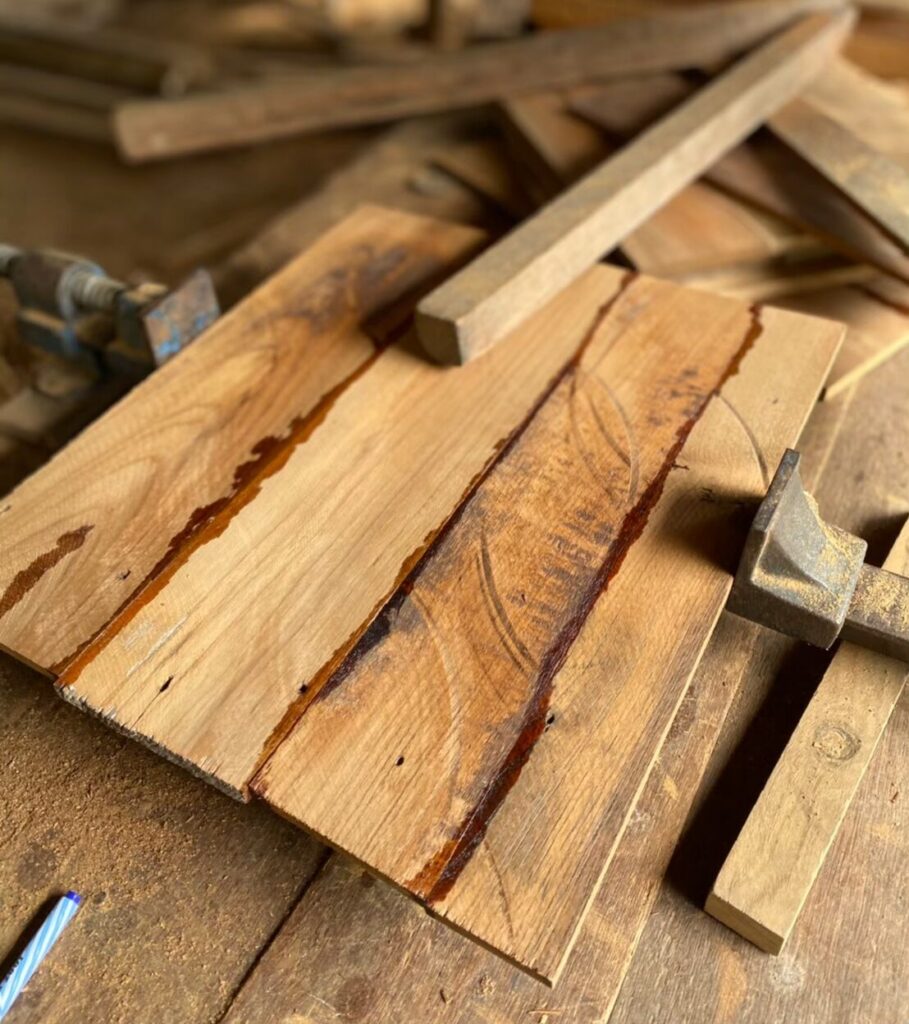
Unlike newly harvested timber, reclaimed teak has already had a previous life. Its surface may carry traces of that history: variations in color, nail holes, weathered textures, and grain patterns shaped by the natural characteristics of the wood.
But reclaimed teak is more than wood that has been used before.
It is a material with qualities worth understanding, a history worth preserving, and possibilities that depend on how well it is selected and designed.
At WoodTist, we see reclaimed teak as a starting point for contemporary furniture—not because every old piece of wood is perfect, but because the right piece can still have something meaningful to become.
Why Is Teak an Important Wood in Thailand?
Teak (Tectona grandis) is native to parts of South and Southeast Asia, including Thailand. Within Thailand, its natural distribution is strongly associated with the northern region and its mixed deciduous forests.
For a long time, teak has been an important timber in the region. Its desirable wood properties have made it useful for construction, furniture, flooring, and other applications.
This connection between teak and the built environment gives reclaimed teak a particular significance. Timber that once formed part of a house may still be suitable for another purpose after the original structure is gone.
The wood does not become valuable simply because it is old. Its value also depends on its condition, its natural properties, and the decisions made about how to use it again.
What Makes Teak Good for Furniture?
Teak is valued for several characteristics that can make it suitable for furniture when the timber is properly selected and prepared.
1. Natural Durability
Teak heartwood has a high degree of natural durability. Its natural extractives contribute to its resistance to deterioration, which is one reason teak has been used in furniture and other demanding applications.
However, durability is not the same as being waterproof. Teak can still absorb and release moisture, and its condition can change with its environment.
For reclaimed teak, the craftsperson must assess the actual timber rather than assume that every old board will perform equally well.
Good material selection, appropriate preparation, and thoughtful furniture construction all matter.
3. A Naturally Distinctive Appearance
Teak can display warm brown and golden tones, varied grain patterns, and differences in color from one piece to another.
Reclaimed boards may also retain marks from their previous use. These characteristics can give a finished piece a visual depth that is difficult to reproduce with a perfectly uniform surface.
Not every mark needs to be preserved, and not every board will look the same. The design decision is knowing which characteristics contribute to the piece and which need to be addressed during preparation.
4. A Material That Can Be Used Again
When timber from an existing structure is suitable for reuse, it can serve a new purpose rather than being discarded.
This is one practical reason reclaimed teak can be relevant to more resource-conscious design. But the word reclaimed alone does not guarantee that a product is sustainable. The timber’s origin, usable condition, amount of waste, processing, and final lifespan all matter.
For WoodTist, reuse begins with understanding the material and finding an appropriate next use for it.
Is Old Teak Better Than New Teak?
Not necessarily.
Reclaimed teak and newly sourced teak are different starting points for design, but age alone does not determine which piece is better.
Reclaimed teak may offer distinctive grain, traces of its previous use, and timber that has already undergone years of environmental exposure. Yet some boards may have cracks, nail damage, old coatings, or other conditions that limit how they can be used.
New teak can offer different dimensions, surfaces, and material characteristics. It also requires appropriate preparation and moisture management.
The useful question is not simply, “Is old teak better?”
It is: “What is this particular piece of wood suitable for?”
That question guides the selection of material, the design of the furniture, and the way each board is used.
How Does Reclaimed Teak Become Contemporary Furniture?
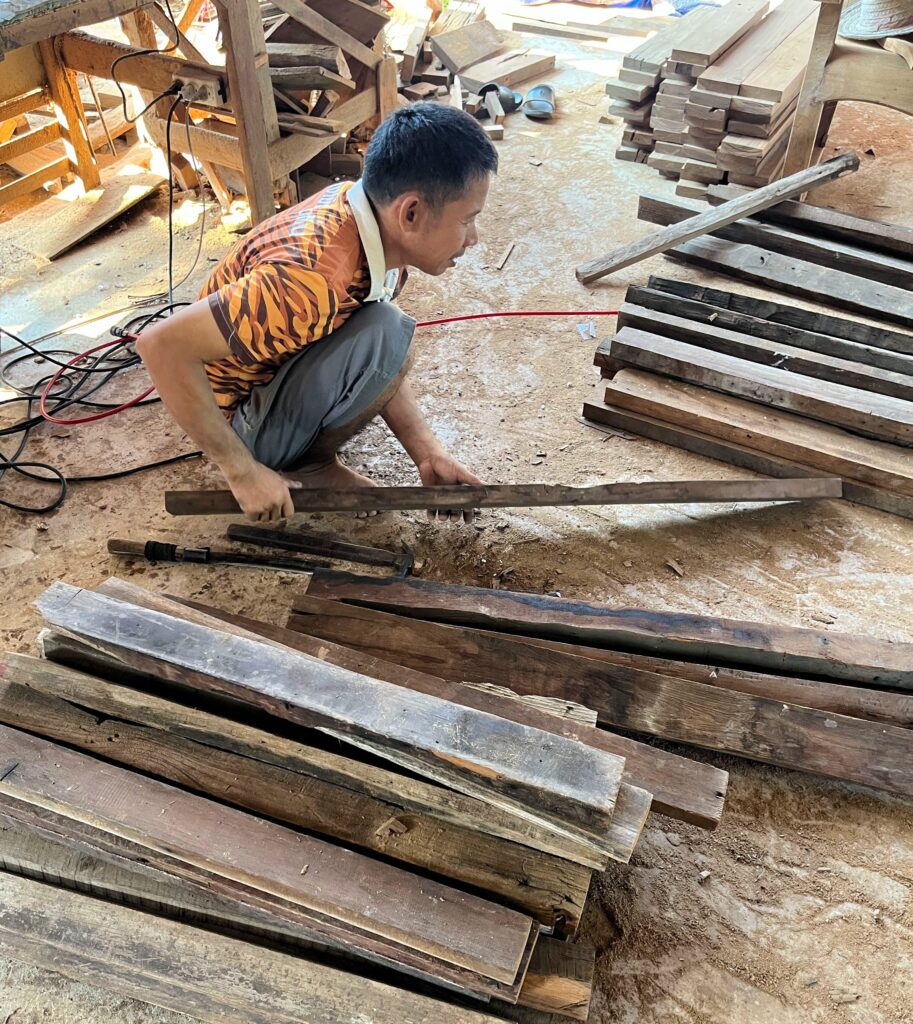
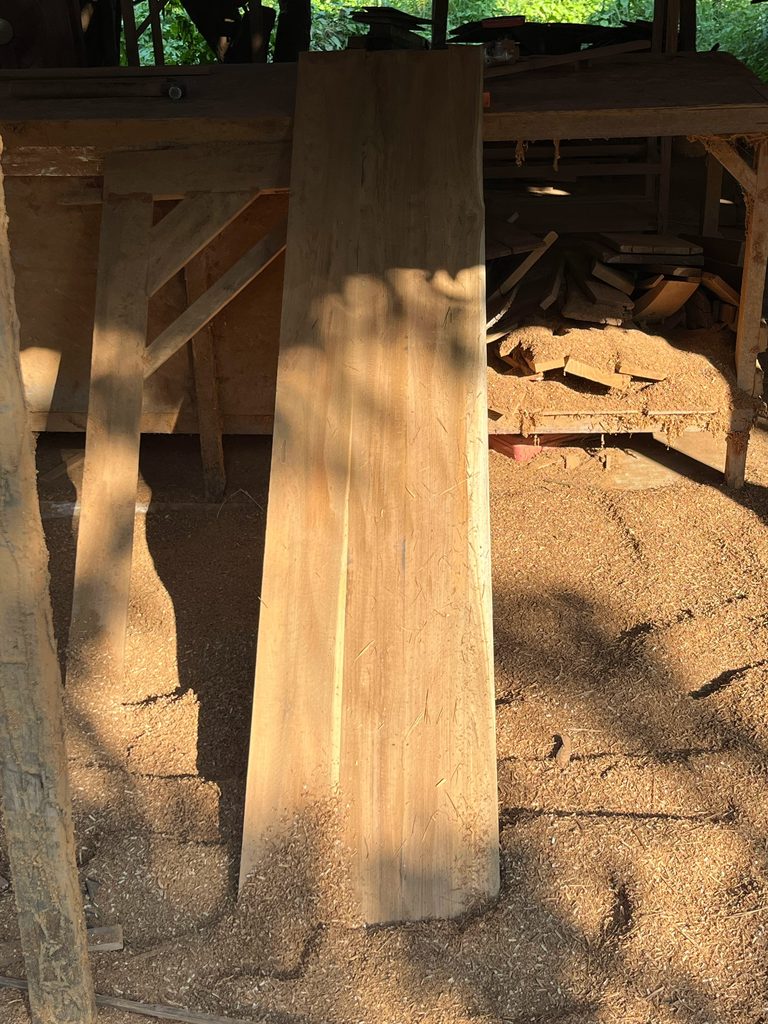
A reclaimed board cannot always be used in the same way as a newly prepared, uniform piece of timber. It may have irregular dimensions, old holes, surface wear, or a grain pattern that influences how it should be cut.
This is where material knowledge and design work together.
At WoodTist, the process begins by considering the characteristics and potential of the available wood. Different pieces may be more suitable for different furniture components.
For example:
Old floorboards may be considered for tabletops, drawer fronts, or chair backs.
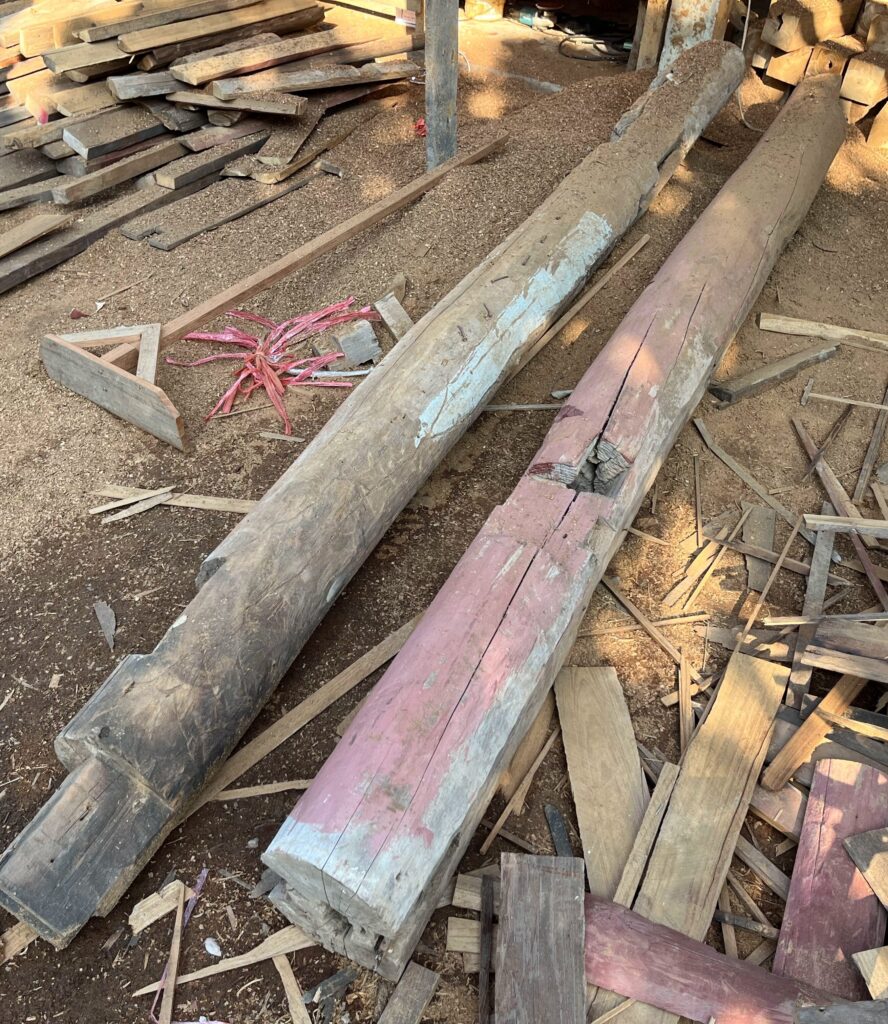
Posts and beams may provide suitable material for table legs or other structural components.
Smaller sections of timber may be used for rails, frames, or other parts, depending on their condition and dimensions.
These are examples, not fixed rules. The actual use depends on the size, grain, condition, and structural requirements of each piece.
The aim is not to force every board into a predetermined design. It is to understand the material first, then design with its possibilities in mind.
Does Reclaimed Teak Furniture Have to Look Rustic?
No. Reclaimed teak can be used in furniture with a traditional, rustic, minimal, or contemporary expression. The final appearance depends on the design, the selection of boards, the finishing process, and how much of the material’s previous character is retained.
Some designs may highlight weathered surfaces and visible marks. Others may use cleaner lines and carefully prepared surfaces to create a more restrained appearance.
The material does not dictate one particular style.
For WoodTist, design is a way to bring the nature of the wood into a form that makes sense for the person who will live with it.
Why Choose Reclaimed Teak for a Personal Space?
Furniture is part of everyday life. It occupies space, supports routines, and becomes part of the environment in which people work, rest, gather, and make memories.
Choosing reclaimed teak can add another dimension to that relationship.
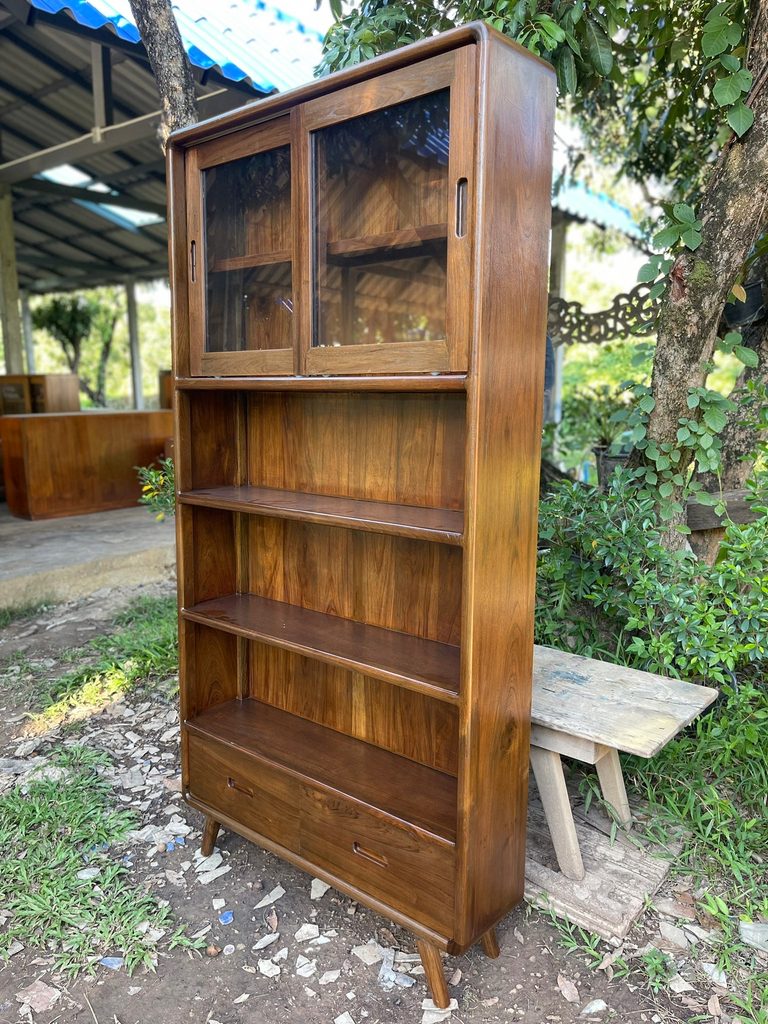
A table may carry the natural variations of its boards. A cabinet may bring together timber with different tones and marks. A custom-made piece can be designed around the proportions, needs, and preferences of the person who will use it.
The result does not need to look like an antique or imitate an old house. It can be contemporary furniture made from a material with a past.
That is the distinction WoodTist cares about: not simply using old wood, but understanding what it can become and how it can belong in someone’s life.
Reclaimed Teak: Not Just an Old Material
The value of reclaimed teak is not that every piece is rare, flawless, or automatically better than new wood.
Its value lies in a combination of natural wood properties, individual character, the possibility of reuse, and the knowledge needed to work with it responsibly.
A board that once served a house may become part of a dining table. A beam may be suitable for a furniture frame. Another piece may not be suitable for reuse at all.
Each decision requires an understanding of the material.
Good design does not always begin with a blank material. Sometimes, it begins by understanding what is already there.
At WoodTist, we create according to the nature of the material and believe in its natural beauty. We make furniture that connects the character of reclaimed teak with the identity and everyday life of the person who chooses it.
FAQ
What is reclaimed teak wood?
Reclaimed teak wood is teak timber recovered from an existing structure or previous use and prepared for a new application. Its suitability depends on its condition, dimensions, and the intended use.
Is reclaimed teak durable?
Teak heartwood is naturally durable, but the performance of reclaimed timber depends on the condition of each piece, its previous exposure, and how it is prepared and used.
Is reclaimed teak waterproof?
No. Teak has natural durability, but it is still a wood material that responds to moisture. Water exposure can affect the timber, its finish, and the joints of a furniture piece.
Is reclaimed teak more sustainable than new teak?
Reusing existing timber can extend the useful life of a material and reduce the need to discard it. However, sustainability depends on factors including responsible sourcing, processing, waste, and how long the finished furniture remains useful.
Can reclaimed teak be used in modern furniture?
Yes. Reclaimed teak can be used in modern furniture, including tables, chairs, cabinets, and custom-made pieces. The design should respond to the wood’s actual condition, dimensions, grain, and structural requirements.
Why does reclaimed teak have different colors and marks?
Wood varies naturally, and reclaimed boards may also retain marks from their previous use. These differences depend on the individual board and its history, so the appearance of reclaimed teak is not perfectly uniform.
How do I choose reclaimed teak furniture?
Look beyond age and appearance. Ask about the timber’s source, how it has been assessed and prepared, whether the construction suits its intended use, and how the maker handles material variation and after-sales care.
Not Just Wood! It’s You.
Interested in designing a Reclaimed Teak Table or custom furniture? Order now via LINE: @409yiadr